
US Military Temporary Detention Powers in Los Angeles: Exploring the Commander’s Decision
The recent announcement by Maj. Gen. Scott Sherman regarding the temporary detention of protesters in Los Angeles has sparked a heated debate among legal experts, community activists, and policy makers alike. According to Sherman, troops deployed to Los Angeles have the authority to briefly detain individuals during episodes of civil disorder. However, they do not possess the power to conduct arrests. This subtle yet significant distinction has become a point of contention as the nation scrutinizes the balance between public safety and civil liberties.
In his detailed briefing, the commander emphasized that the presence of National Guard troops in the Greater Los Angeles Area is aimed at protecting federal personnel and facilities in the wake of protests triggered by recent Immigration and Customs Enforcement (ICE) operations. The announcement has left many wondering about the legal basis of such orders and the potential impact on communities already on edge. As we examine the situation, it is essential to address the tricky parts of ever-changing law enforcement dynamics in public protests and the tangled issues that emerge when military orders intersect with domestic civil rights.
Proponents argue that the deployment is a necessary measure to ensure the safety of officers and deter chaotic scenes during protests. Conversely, critics express concerns about the potential for overreach and the blurring of lines between military involvement and civilian law enforcement. In the following sections, we will take a closer look at the detailed aspects of this complex narrative while using accessible language, practical examples, and clear references to legal principles that affect both sides of the debate.
National Guard and ICE Collaboration: A Closer Look at Force Protection Measures
The decision to train approximately 500 National Guard troops to accompany ICE agents on immigration—and raid operations has raised eyebrows nationwide. According to Maj. Gen. Sherman, these troops are on hand solely for force protection and not to conduct independent law enforcement activities. This collaboration between state-trained military personnel and federal law enforcement agencies is unprecedented in many respects and encapsulates several tricky facets of modern-day security operations.
Many have noted that the training regimen adopted by these troops goes beyond standard military protocols. The troops have undergone sessions on crowd control and learned the relevant rules of force they are allowed to employ while operating in sensitive urban environments. In a setting where protests can quickly escalate, the importance of clearly defined roles becomes super important. The commander’s statement that “once a Guard member has his or her arm on a person, that’s when they’re detaining that person” hints at a very controlled and momentary application of force intended solely for stabilization, rather than penal action.
It is important to understand that this collaboration is not intended to give military forces broader policing powers. Instead, it is a carefully orchestrated measure to ensure that federal personnel can safely perform their duties. The following bulleted list summarizes the key aspects and intended roles of the National Guard and ICE partnership:
- Force Protection: Providing a shield for ICE personnel during raids.
- Temporary Detention: Allowing brief restraint of individuals who pose an immediate threat.
- Crowd Management: Utilizing training on crowd control to diffuse potentially volatile situations.
- Controlled Engagement: Emphasizing that any physical contact should be limited to necessary and momentary containment.
While the above measures are designed with safety in mind, they also highlight the delicate dance between military involvement and civil rights. Many community leaders have expressed concern over how the use of military equipment and training might intimidate protestors or inadvertently escalate tensions. The decision to employ such force protection protocols, while seemingly straightforward, has plenty of subtle details that require further legal examination and open debate.
Legal Challenges and the State Sovereignty Debate: Understanding the 10th Amendment Implications
The deployment of military personnel in civilian settings without traditional state coordination has been met with immediate legal challenges. California Attorney General Rob Bonta and Governor Gavin Newsom have joined forces to file a lawsuit against the federal government. Their argument centers on the claim that sending troops without state approval violates state sovereignty and infringes upon the protections offered by the 10th Amendment of the U.S. Constitution.
At the heart of the legal dispute lies the question of whether federal authorities have the right to deploy military resources for domestic law enforcement purposes without first navigating the local and state-level bureaucratic systems. Critics point out that such decisions may sidestep the traditional channels established by the U.S. Constitution. Supporters, however, maintain that in times of heightened risk and protest, the expedited deployment could be seen as a necessary means of ensuring public safety.
To understand the legal underpinnings, consider these tricky bits:
- State Sovereignty: The legal concept that states retain full control over their internal affairs. The involvement of federal military forces—an entity with a distinct chain of command—raises concerns that state authorities may be undermined or excluded from critical decision-making processes.
- The 10th Amendment: This amendment reserves powers not delegated to the federal government for the states and the people. Opponents argue that unilateral decisions by the federal government encroach upon these reserved powers.
- Legal Precedents: There are established legal precedents concerning the presence of military forces in a domestic setting, most notably the Posse Comitatus Act, which restricts the use of federal military personnel in a strictly law enforcement role.
The lawsuit filed by California’s top legal and political figures leverages these points, asserting that the recent deployment not only disrupts state operations but also blurs the boundaries delineated by the U.S. Constitution. As the debate unfolds, some legal experts suggest that if the courts decide against the federal government, it could lead to sweeping changes in how future deployments under similar circumstances are handled. The legal community remains on edge, closely watching for rulings that could redefine the balance of power between federal authorities and state governments.
This legal conundrum is laden with potential long-term ramifications. It prompts us to ask: When does the temporary protection of federal personnel cross into a zone where state rights are compromised? And who ultimately bears the responsibility when incidents occur amid these overlapping chains of command? These are the kind of tangled issues that will require careful analysis and ongoing public discussion in the months and years ahead.
Assessing the Impact on Local Communities and the Broader Protest Movement
The reaction from local communities, particularly in Los Angeles, has been mixed. Some residents support the increased presence of military-trained personnel as a means to maintain law and order amidst protests. Others worry that the temporary detention powers, even if limited to force protection, could lead to unintended consequences for demonstrators who are merely exercising their rights to free speech and assembly.
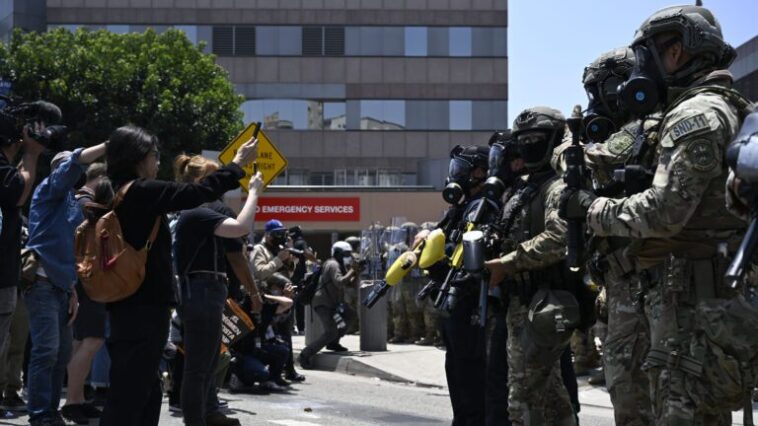
Community leaders have raised concerns about what they describe as “overwhelming” measures that seem to tilt the balance in favor of federal authorities. The image of uniformed troops on the streets, even when their mandate is strictly limited, can be off-putting to citizens accustomed to handling their own public safety issues.
In practice, the presence of these forces could result in increased tensions, especially if protestors interpret even brief detentions as a prelude to more aggressive law enforcement tactics. Many of the local residents have noted that these measures may inadvertently escalate the situation instead of calming it, leading to what many consider a dangerous precedent.
Beyond Los Angeles, the ripple effects of this policy could stretch across the nation. New tactics being employed under the guise of temporary detention may influence similar operations in other states, particularly in regions where ICE operations and protests intersect regularly. As citizens weigh in on these developments, public opinion appears to be divided between those who believe enhanced federal protection is essential and those who see it as an erosion of civil liberties.
It is also worth noting the impact on protest organizers. Many advocacy groups are now faced with the nerve-racking task of determining whether to continue their demonstrations or risk provoking a response that could leave participants with lasting legal consequences. The fine points of what constitutes a “threat” or an “assault” under these new conditions have yet to be clearly defined, leaving both protesters and law enforcement to sort out their own interpretations on the ground.
In addition to individual rights, the broader community is left with questions about the appropriate role of military personnel in public civil matters. While some view this partnership as an innovative and proactive step in safeguarding democracy, others fear that the integration of military discipline into civilian protest response strategies may lead directly to an erosion of the freedoms that have long defined American civic life.
Questions About Federal and State Coordination: Finding a Path Forward
The issues arising from the current deployment are not solely legal or tactical—they also bring into sharp focus the question of federal and state coordination in matters of public safety. The lack of coordination has been a bone of contention, resulting in lawsuits and widespread debates about the appropriate balance between state and federal authority. The situation is complicated by the fact that such coordination—or the lack thereof—affects both the execution of law enforcement duties and the protection of civil rights.
Those in favor of a more assertive federal presence argue that the unique threats posed by civil disorder and large-scale protests require fast, decisive action that may not be possible when state and federal lines are rigidly drawn. They contend that in moments of crisis, the federal government should be able to bypass what they see as the overly complicated state procedures to ensure that the situation is managed quickly and efficiently.
On the other hand, state officials and legal experts warn that this approach risks upsetting decades-old traditions of state sovereignty. They stress that coordinated responses, where both layers of government work together, are essential for maintaining trust with local communities and ensuring that actions taken in the name of security are both transparent and accountable. The following table contrasts key points from both perspectives:
| Federal Perspective | State Perspective |
|---|---|
|
|
This table highlights the small distinctions between the two stances, demonstrating that while both sides share a common interest in public safety, they differ on how to achieve that goal. The federal approach is viewed by some as a necessary adaptation to modern challenges, whereas the state perspective emphasizes caution and a respect for established legal boundaries.
As society grapples with these issues, it becomes clear that any lasting solution will require an honest conversation between federal authorities and state governments. The debate is not simply about military orders or protester conduct; it is about the fundamental nature of American democracy and the delicate balance between security measures and individual freedom. Working through these issues will be a collaborative process where both federal and state entities must find a path that honors constitutional rights while addressing real-world threats.
Media Coverage and Public Perception: The Role of Communication in Shaping Opinion
The unfolding events in Los Angeles have been heavily scrutinized by the media, which plays a crucial role in how the public interprets and reacts to government actions. With images of uniformed troops standing by to detain protesters—even if only briefly—fears about the militarization of public spaces have spread rapidly across social media and news outlets.
Critics argue that media framing sometimes fails to capture the nuanced details of such operations. For example, headlines can focus on the term “detention” without adequately explaining the limited and force-protection nature of the practice. This narrow portrayal can contribute to a perception of a government overstepping its bounds, even if the actual policy intends only momentary restraint to maintain safety.
It is essential for the media to dive in and carefully unpack the situation by addressing several key points:
- Context: Explaining the reasons behind the deployment, including recent protest activities and ICE raids, can help contextualize the actions taken.
- Legal Permissions: Outlining the legal framework—including constitutional constraints and existing laws governing military intervention in domestic matters—sheds light on the decision-making process.
- Balance of Risks: Discussing both the potential safety benefits and the risks of long-term implications on civil liberties allows for a more balanced understanding of the issue.
By providing the public with detailed explanations and addressing the confusing bits of terminology that often result in misinterpretation, journalists and media outlets have the chance to foster a more informed debate. Public perception is heavily influenced by the language used when describing such events. Hence, it becomes super important for media professionals to choose words that accurately reflect the measured nature of these actions rather than those that incite panic or suggest authoritarianism.
Media outlets bear the responsibility to report not only on what is happening but to offer commentary that encourages critical thinking. When the public is left to rely on oversimplified narratives, the opportunity for productive discussion about the right balance between security and personal freedom is lost. A well-informed public can better participate in democratic processes, particularly when future decisions will likely challenge the existing equilibrium between federal authority and state rights.
Evaluating the Balance Between Security Measures and Civil Liberties: An Opinion Perspective
At its core, the debate over the deployment of National Guard troops to provide temporary detention touches upon one of America’s everlasting tensions: balancing security with civil liberties. Those tasked with maintaining public order must carefully figure a path that protects both federal officers and the personal freedoms enshrined in the Constitution.
The opinion here is not to dismiss the need for enhanced security in times of public unrest but rather to call for a more cautious and transparent approach. Many acknowledge that in moments of intense public disorder, a prompt response is necessary to prevent chaos. However, the potential for abuse or misinterpretation of temporary detention powers remains a constant worry for civil rights proponents.
There are several core factors that must be weighed carefully in these discussions:
- The Duration of Detention: Temporary detention should be truly brief and strictly controlled. Any deviation could lead to an escalation that might result in longer-term detentions without due process.
- The Clarity of Command: Both federal and state officers need to have clearly defined roles. When responsibilities stir up little twists in authority, it can lead to confusion during critical moments.
- Accountability and Oversight: Ensuring that any use of force or detention is fully monitored can prevent the misuse of power and help maintain trust between the public and law enforcement agencies.
The nerve-racking task of finding your way through this maze of legal and operational challenges calls for open dialogue between lawmakers, law enforcement officials, military leaders, and community representatives. As the events in Los Angeles evolve, it becomes clear that decisions made in the heat of crisis will have long-lasting implications on how civil liberties are preserved in emergency situations.
It is essential to raise the question: Are these measures a temporary fix for a specific moment, or do they herald a shift towards more permanent federal oversight in civil matters? This is a question that many believe deserves further scrutiny. While day-to-day operations have rarely needed such heavy-handed interventions, the current political and social climate has created conditions in which even measured responses can have trickier and more tangled consequences.
This opinion piece calls for thorough oversight and continuous public engagement. Lawmakers and military officials alike should work together transparently to ensure that what starts as a necessary response to immediate threats does not evolve into a broader erosion of the rights guaranteed to every citizen under the Constitution.
Historical Context and Future Implications: Comparing Past Measures to Present-Day Challenges
Historically, the role of military forces in domestic law enforcement has always been a subject of contentious debate in the United States. From the deployment of troops during the civil rights era to the response in times of natural disasters, every instance where the military has intersected with civilian affairs carries its own set of tricky parts and little details that continue to shape policy today.
This latest scenario in Los Angeles is part of a long tradition where security measures have to be balanced against the principle of civilian governance. In past instances, the Posse Comitatus Act—a law designed to prevent the military from acting as police—has served as a guidepost, albeit one that is continually re-examined in light of evolving threats and political pressures.
As we consider the historical background, several key comparisons emerge:
- Historical Precedents: Previous deployments have usually been subject to strict limitations and clear communication between state and federal authorities. Modern operations must learn from these examples and adapt to today’s requirements.
- Operational Transparency: In earlier periods, well-defined chains of command helped ensure that military intervention was both temporary and proportional to the threat. The need for such transparency is super important today given the pervasive influence of digital media and public scrutiny.
- Future Policy Development: Decisions made under the current circumstances could set precedents that influence policy across the country. The legal debates surrounding state sovereignty and federal coordination will likely inform future legislation on military assistance in domestic affairs.
As new policies are shaped, it is critical for lawmakers to sort out the subtle parts of past practices with the pressing needs of the modern era. The lessons learned from historic instances of military intervention in domestic matters should serve as guideposts rather than constraints on innovation. Yet, every innovative measure must be weighed against the risk of overreach and the potential infringement on individual freedoms.
Looking ahead, it is clear that both federal and state authorities must work hand in hand to craft laws and protocols that can respond swiftly to emergencies without sacrificing the rights that Americans hold dear. This calls for continued research, ongoing dialogue, and perhaps most importantly, a commitment to transparency and accountability in every decision made under pressure.
Ensuring Accountability: Steps for Greater Transparency and Legal Oversight
One of the most significant challenges of the current deployment strategy is ensuring that adequate accountability measures are in place should any incidents arise. The legal and operational framework surrounding temporary detention must be both clear and strictly enforced to prevent the misuse of power. Given the potentially nerve-racking nature of these interactions, establishing robust oversight is a key component for maintaining public trust.
There are several measures that can be undertaken to guarantee accountability:
- Regular Audits: Independent reviews of how and when detention powers are exercised, with reports made public to ensure accountability.
- Clear Protocols: Detailed guidelines that outline exactly when and how detention is permitted, reducing the chance for misinterpretation during critical moments.
- Enhanced Training: Continued education for both military and law enforcement personnel on the fine points of crowd control and the limits of their authority in civil settings.
- Community Engagement: Regular meetings and feedback sessions with local community leaders to address concerns and integrate constructive recommendations into future deployments.
The implementation of these measures can help alleviate the concerns of those who fear that the increased military presence could lead to an erosion of civil freedoms. By making the rules clear and subject to regular review, state and federal authorities can better navigate the twists and turns associated with applying force-protection tactics in crowded public spaces.
Moreover, enhanced transparency not only helps in preventing potential abuses but also fosters a better understanding among the community regarding why certain decisions are made. Open lines of communication between military officials, law enforcement agencies, and the public are essential in building a sustainable model for handling similar situations in the future.
Looking Ahead: Policy Reforms and the Role of Civic Engagement
Considering the current tensions, it is worth contemplating potential policy reforms that could reconcile federal security mandates with state rights protection. The ongoing legal challenge, driven by state officials like Attorney General Rob Bonta and Governor Gavin Newsom, underscores the urgent need for clear guidelines and legislative oversight. Without such measures, there remains a risk that future deployments in domestic settings may repeat the mistakes of the past or cause unintended harm to civil liberties.
A forward-looking policy approach should include the following key components:
- Legislative Clarity: Congress should consider establishing precise guidelines that outline the circumstances under which military forces can be deployed for force protection and how long such measures can remain in place.
- Improved Coordination: Creating formal channels for communication and decision-making between federal agencies and state governments can ensure that deployments are both effective and respectful of state sovereignty.
- Protections for Protesters: Legal safeguards should be instituted to ensure that the temporary detention of protesters does not lead to unintended infringement upon the right to peaceful assembly and free speech.
- Regular Reviews: Establishing a mechanism for periodic review of deployment practices to assess their impact on communities and adjust protocols as necessary.
These policy reforms, coupled with proactive civic engagement, can help bridge the gap between security measures and civil liberties. Empowering local communities to have a say in how such deployments are managed ensures that any future strategies are rooted in the realities of everyday life rather than imposed solely from afar by federal agencies.
Public opinion will undoubtedly play a significant role in shaping these policy reforms. As citizens become more informed about the trade-offs involved in deploying military forces in civilian settings, their feedback can drive more thoughtful and balanced legislation. It is essential for lawmakers to foster a dialogue with the affected communities so that every voice is heard and every claim is given due consideration.
Conclusion: Reflecting on the Intersection of Security, Sovereignty, and Civil Rights
In conclusion, the decision to deploy National Guard troops to temporarily detain protesters in Los Angeles has ignited a multifaceted debate that touches on issues of state sovereignty, civil liberties, and the role of the military in domestic affairs. The measure, intended to safeguard federal personnel and prevent further violence during protests, has instead revealed a host of tricky parts and tangled issues that require careful legal and policy review.
While proponents of the deployment argue that the initiative is essential for protecting federal operations during tumultuous times, critics are rightly concerned about the slippery slope that such measures could represent. The invoked temporary detention authority, if not carefully regulated, may set unwelcome precedents that could compromise the fundamental freedoms guaranteed by the Constitution.
Moreover, the current legal challenges, centered around constitutional interpretations of state sovereignty and the 10th Amendment, highlight the pressing need for clear protocols and robust oversight mechanisms. It is super important for both federal and state leaders to maintain open communication and work through the fine shades of legal and operational details to ensure a balanced approach that respects civilian rights while implementation is both efficient and secure.
History teaches us that moments of crisis, though intimidating and full of problems, also present opportunities for meaningful reform. The Los Angeles deployment is a reminder that the intersection of security, sovereignty, and civic rights is always riddled with challenges that require cooperative and transparent decision-making. Only by engaging in honest dialogue and implementing transparent measures can we ensure that the rule of law is maintained and that the rights of every citizen are defended.
This expansive debate should serve as a catalyst for crafting policies that are both effective in combating immediate threats and respectful of the long-held principles of our democratic society. In the end, the goal is not to choose between security and liberty but to develop strategies that preserve both, ensuring that America remains a nation where the balance between public safety and personal freedom is continually and thoughtfully maintained.
Ultimately, the unfolding situation in Los Angeles is more than just an isolated incident. It reflects broader national and constitutional questions that will likely be discussed in legal circles and echoed in community meetings for years to come. As these discussions continue, it is crucial that every stakeholder—be it a federal official, a state leader, or an ordinary citizen—actively participates in shaping a future that honors the delicate balance between protecting our communities and upholding the civil liberties that define our nation.
Originally Post From https://abcnews.go.com/US/us-military-temporarily-detain-protesters-los-angeles-commander/story?id=122736204
Read more about this topic at
National Guard can temporarily detain LA protesters: DHS
Photos: St. Louis protests growing ICE raids and deportations