Setting the Stage: Federal vs. State Authority in Domestic Security
Recent judicial proceedings have thrust the tension between federal and state powers into the spotlight. A federal judge’s inquiry into whether the Trump administration’s deployment of the National Guard in Los Angeles violates the Posse Comitatus Act has sparked a heated debate over the limits of presidential authority on domestic soil. In this opinion editorial, we dig into the history and meaning of this legal clash, reviewing the tangled issues surrounding this decision, and highlighting the implications for both the rule of law and public safety in the United States.
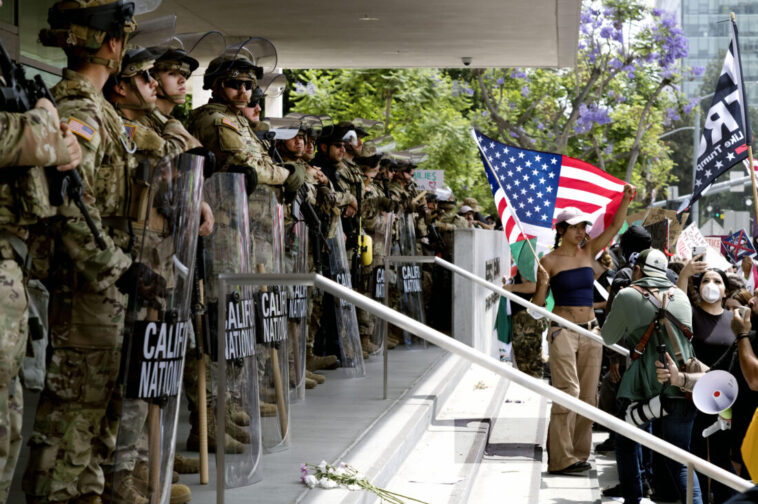
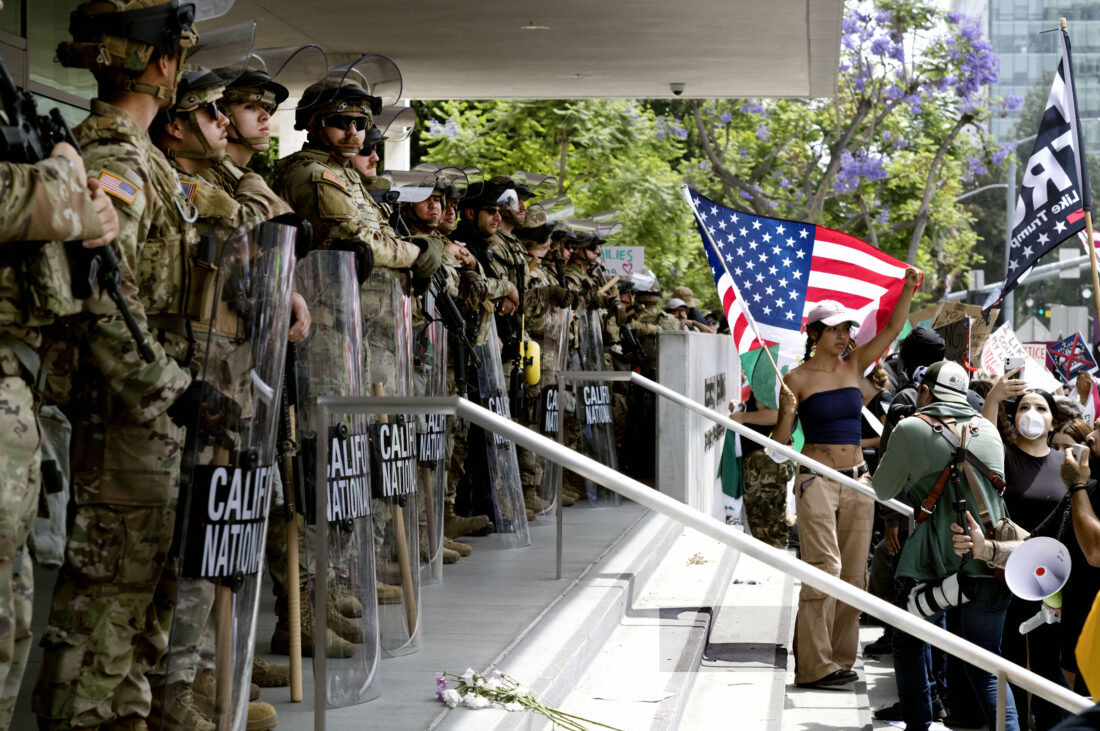
The dispute centers on President Donald Trump’s decision to deploy federal troops during anti-ICE protests in Los Angeles. Critics, including California Governor Gavin Newsom, have argued that this move oversteps the boundaries between state and federal control by, as some claim, endangering the delicate balance maintained by the Posse Comitatus Act. This federal law, designed to prevent military interference in civilian affairs, has emerged as a critical pivot around which the entire controversy turns.
Throughout the ensuing legal battle, various players have contributed their perspectives—from federal appointees to military experts, and from state leaders to constitutional scholars. Notable figures such as Vice President JD Vance defended the president’s decisions, asserting that the deployment was both legitimate and essential to restore order. Yet, the judicial review continues to weigh the president’s discretionary powers against long-standing legal limits. This editorial aims to offer a balanced exploration of the subject, unpacking the many layers that make this dispute both intriguing and far-reaching in its consequences.
Understanding the Posse Comitatus Act: Tricky Parts of the Law
The Posse Comitatus Act is a statute that originated in the post-Civil War era, intended to restrict federal military involvement in domestic law enforcement. At its heart, the law is meant to ensure that the nation’s military does not overstep into the realm of civilian policing—an area that is traditionally monitored by state and local authorities. This statutory measure preserves a clear separation between military and civil governance, ensuring that decisions affecting everyday life are made by elected officials and law enforcement professionals whose responsibilities lie within the community.
In today’s politically charged climate, the Act has become a focal point for arguments about judicial overreach and presidential power. Some legal analysts point out that while the law is designed to keep the military from engaging directly in civilian tasks, there are “confusing bits” regarding its exact application during times of unrest or emergency. Supporters of federal deployments argue that the Act does not completely bar presidential intervention in dangerous situations, while opponents insist that such actions risk undermining the core principle of civilian oversight.
Key aspects of the Posse Comitatus Act include:
- The prohibition against using U.S. military personnel for routine law enforcement functions.
- The emphasis on preserving state and local control over police activities.
- The controversy surrounding what constitutes “domestic law enforcement” during times of civil disorder or public protests.
- The interpretative challenges posed by situations that straddle the border between military assistance and direct policing.
These points illustrate the delicate balance the Act tries to maintain—a balance that is increasingly put to the test in politically charged scenarios. Although the president does have considerable leeway during emergencies, it remains a point of contention whether such measures should be considered acceptable when they infringe on state authority.
Presidential Authority in National Emergencies: Balancing Federal Needs with Local Autonomy
The current controversy brings to light several probing questions about presidential authority. President Trump’s decision to federalize National Guard troops was defended as a necessary measure to re-establish order amid what the administration portrayed as a breakdown in local enforcement. Yet, Governor Newsom and others see this as an overt intrusion into state prerogatives—a classic example of federal versus state conflict, a topic that is often riddled with tension.
One may wonder: When does the need for national security justify the suspension or alteration of state authority? On one side of the debate, proponents of strong federal intervention argue that the president must have the flexibility to act decisively in any situation where public safety is at risk. They cite precedents in which swift federal actions have precluded further unrest and restored order. Critics, however, assert that such interventions set dangerous precedents by undermining the authority of democratically elected local leaders, risking centralization of power at a time when maintaining local accountability is critical.
This conflict is not merely academic. It touches on deeply personal and practical aspects of governance:
- The degree to which citizens trust state versus federal authorities.
- The potential for misuse of power in politically charged environments.
- The need for clear rules regarding when and how federal forces can be deployed internally.
- The enduring importance of constitutional limits on executive power.
In this instance, the overlap between legal interpretations and political maneuvering complicates what might otherwise be a straightforward consideration of presidential powers. The decision to deploy National Guard soldiers—despite opposition from state officials—has prompted reflection on both the language of the law and the spirit in which it was written. While the president maintains that his actions were in response to imminent threats to public order, critics argue that deploying troops in a situation where local law enforcement could suffice may unnecessarily escalate tensions.
A Closer Look at the Legal Showdown: Dissecting the Timeline
The sequence of events leading to and following the federal judge’s inquiry is important for understanding the full scope of the legal debate. A brief timeline of the major milestones includes:
| Date | Event | Key Actor(s) |
|---|---|---|
| Early June 2025 | Anti-ICE protests intensify in Los Angeles. | Local protesters, federal ICE agents, National Guard |
| Mid June 2025 | President Trump orders the deployment of National Guard troops to quell disturbances. | Trump Administration |
| Shortly After | California Governor Newsom files a complaint arguing that the move violates the Posse Comitatus Act. | Governor Gavin Newsom, Legal Counsel |
| Late June 2025 | An appeals court rules in favor of the Trump administration, allowing the president to retain control of the troops. | 9th Circuit Appellate Panel |
| June 21, 2025 | A federal judge in San Francisco calls for briefs on whether the administration’s deployment breaches the Act. | U.S. District Judge Charles Breyer |
This table not only codifies the timeline of events, but it also underscores how swiftly these legal questions can evolve. As the situation develops, both sides are calling on the courts to clarify these tangled legal points. The timeline serves as a reminder that decisions affecting the interplay of federal and state power are rarely made in a vacuum—they are influenced by rapidly changing circumstances on the ground.
Perspectives from the Military and Legal Communities: Diverging Opinions on Federal Interventions
The debate over the use of military forces in domestic affairs has drawn a diverse range of opinions from experts across various fields. Military analysts appreciate the need for rapid response mechanisms in times of public disorder, yet many legal experts caution that such interventions should be strictly circumscribed by existing law. The opinions are divided—some see the president’s actions as a necessary, if exceptional, measure, while others view them as a deviation from established norms regarding state sovereignty and civilian control of security forces.
Below is a summary of some contrasting viewpoints:
- Military Strategists: They argue that the president must have the flexibility to protect federal assets and maintain public order. The use of the National Guard, they contend, is a tool available under emergency powers, especially when local management of protests might not suffice.
- Legal Scholars: Many experts are concerned that the broad interpretation of presidential power could lead to future overreach. They emphasize that historical interpretations of the Posse Comitatus Act clearly limit military involvement in routine law enforcement—a safeguard against potential abuses.
- State Officials: Figures like Governor Newsom argue that state leaders are better equipped to assess local conditions and manage law enforcement needs. They contend that federal intervention, particularly by the military, muddles accountability and may invite more confusion than clarity amid community tensions.
- Public Safety Advocates: Some community leaders acknowledge that while local law enforcement sometimes struggles with the scope of modern protests, the solution should not be to bypass the established mechanisms that have been built up over decades to ensure fairness and accountability.
It is clear that the differences in opinion reflect deeper ideological divides over issues of power, accountability, and trust in government institutions. As the discussions evolve, they bring into focus the critical importance of ensuring that any use of military force domestically is both legally justified and meticulously scrutinized.
Implications for Future National Guard Deployments: Finding Your Path Through Policy Challenges
The ramifications of the current legal proceedings extend beyond the immediate controversy in Los Angeles. A decision that upholds or overturns the current status quo could set a precedent that shapes future presidential decisions in times of internal strife. If federal authority is permitted extensive leeway to commandeer state National Guard units without strict oversight, it may fundamentally alter how local grievances are managed and how safely—and democratically—national crises are handled.
In particular, three critical implications deserve close attention:
- Precedent for Federal Intervention: A ruling favoring the administration might embolden future presidents to use similar tactics, even when local law enforcement agencies are fully capable of handling disturbances on their own.
- Redefinition of Emergency Powers: Legal clarification regarding the “little details” of the Posse Comitatus Act is paramount. A ruling that allows broader interpretations of the Act could result in its future application being less restrictive, thereby altering the traditional checks on federal power.
- Local Autonomy Versus National Security: The balance between state and federal control of security forces must be maintained. Should federal interventions become normalized, local officials might lose the ability to manage their own law enforcement resources, leading to a scenario in which local needs give way to nationally determined priorities.
The debate is imbued with a number of tricky questions. What exactly defines an “emergency” that justifies such intervention? How can both local autonomy and national security be preserved in a manner that respects the constitutional framework? Policymakers and legal experts will need to grapple with these complicated pieces as they work to revise or reaffirm the boundaries of presidential power.
Charting the Legal and Political Terrain: A Detailed Analysis of Upon the Judicial Inquiry
Recently, Judge Charles Breyer’s decision to ask for further briefings on the matter—prompting both sides to present arguments on jurisdiction and legal precedent—has intensified the scrutiny on this issue. By asking whether the appellate court or the district court retains primary jurisdiction under the Posse Comitatus Act, the judge has opened the door to further debate on the interpretation of this crucial statute.
This legal inquiry is more than a procedural step; it prompts a series of key questions that affect how rules of engagement will be written in the future:
- Jurisdictional Authority: Which body should have the final say—the appellate court with its broader mandate or the district court that is closer to the day-to-day realities of the case?
- Legal Interpretation: How should lawmakers and judges interpret the Act in modern times when social unrest and rapid communication challenge traditional boundaries?
- Checks and Balances: In light of the judicial inquiry, how can a balance be struck that respects both the need for decisive federal action during emergencies and the equally important need for state oversight?
These questions are at the heart of the current controversy. Legal experts who have examined this case suggest that the debate is not merely about one isolated event, but rather about the broader dynamics between state and federal powers. As the case unfolds, every perspective—from local governance to national security—will need to be reconciled in a way that restores public trust and administers justice equitably.
Weighing the Small Distinctions: Assessing the Fine Points of Presidential Decisions
Beyond the overarching legal issues, subtle details of the Trump administration’s decision-making process have also come under scrutiny. The rationale provided by the administration—that deploying the National Guard was a necessary response attributed to a potential threat of violence—invites a closer look at what constitutes a valid emergency. This case forces us to consider whether such justifications are robust enough to override long-held legal precedents meant to preserve civilian control.
In analyzing these small distinctions, one must consider the following aspects:
- The Validity of Threat Perception: Were the threats concrete enough to justify a military response, or were they exaggerated in the interest of exerting federal authority?
- The Impact on Civil Liberties: How does the visible presence of National Guard troops affect the dynamics of protest, free speech, and public assembly in a democratic society?
- The Role of Judicial Review: Can the courts provide clear guidance on these matters, and will future cases benefit from the precedents set in this instance?
Each of these points highlights how the administration’s policy choices are intertwined with legal and political considerations. The fine points of this debate require that we not only assess the immediate situation but also consider broader questions about the nature of presidential discretion during emergency interventions.
Managing Public Order: The Intersection of Law, Policy, and Community Trust
The command to deploy the National Guard in Los Angeles has far-reaching consequences for public order and community trust. On one hand, the presence of federal troops might deter violent outbreaks and signal that the government is prepared to take action. On the other hand, this same action can provoke anxiety among residents, particularly those who interpret the move as an affront to local control and democracy.
Community leaders and local law enforcement have voiced concerns that such federal interventions may complicate efforts to maintain public safety. In some cases, the militarization of the streets has been known to exacerbate tensions, leading to an atmosphere that can be both intimidating and overwhelming. The crucial challenge is to find a policy balance that ensures public security without undermining the very democratic processes the government seeks to protect.
A few key factors that contribute to this debate include:
- Legitimacy of Authority: The perceived legitimacy of any force deployed—whether federal or local—depends greatly on its alignment with the community’s expectations of justice and order.
- Resource Allocation: Are federal resources being deployed efficiently and only when state capacities have been exhausted?
- Communication and Transparency: How well do federal agencies communicate their roles and limitations in contrast to local law enforcement strategies?
- Historical Context: Previous instances of federal intervention, such as during the Civil Rights Movement, offer important lessons on how delicate the balance between security and civil rights can be.
In many respects, the current case represents a modern test of these enduring challenges. As public debate unfolds, it serves as a reminder that any decision impacting national security must be approached with careful consideration for the long-term implications on community trust.
Lessons from History: How Past Precedents Inform the Current Debate
Historical parallels provide valuable perspective on the present crisis. The deployment of National Guard units without the explicit permission of state authorities is not without precedent. One notable instance occurred during the Civil Rights Movement in the 1960s when federal intervention was deemed necessary to protect marchers who were advocating for fundamental rights. This historical example underscores how crisis periods have sometimes required extraordinary measures to safeguard public order and civil liberties.
However, history also teaches us that such measures can carry long-lasting impacts. The tension between states’ rights and federal authority has been a recurring theme in American politics. Each time the federal government exercises power in a way that local leaders deem intrusive, it sets a precedent that can be cited in future disputes. It is this delicate interplay—and the hidden complexities that come with it—that makes the current debate so significant.
Lessons we can draw from history include:
- Importance of Clear Legal Guidelines: Historical misuse or overreach can diminish public trust in government institutions.
- Maintaining the Balance of Power: The balance between federal intervention and state autonomy is critical to preserving democratic principles.
- Impacts on Community Relations: How the government responds during crises directly affects the social fabric of communities. Public perceptions of fairness and justice are put to the test during times of conflict.
- Role of Judicial Oversight: Courts have a fundamental responsibility to ensure that executive actions do not set dangerous precedents that could erode cherished civil rights.
By reviewing these historical precedents, we can better understand not only the current legal showdown but also obtain key insights into how best to rectify or prevent similar conflicts in the future. History, with all its fine shades and tiny twists, continues to serve as a guide in modern governance.
The Road Ahead: Policy Implications and Future Challenges
The outcome of the ongoing legal dispute will likely have significant ripple effects in policy and governance. If the courts ultimately side with the administration, the decision could embolden future presidencies to use similar tactics during periods of unrest. Such a ruling might signal that converting state National Guard units into federal assets is acceptable, even in cases where local law enforcement is already managing public order.
On the flip side, a ruling that favors state authority would reaffirm the principle that the federal government must exercise its emergency powers judiciously and with due regard for state control. Such a decision would send a strong message that interfering with local governance is not a matter to be taken lightly.
This debate carries several key policy implications:
- Revising the Legal Framework: Legislators may be prompted to revisit and possibly revise the Posse Comitatus Act to address modern challenges. This could involve clearer definitions of what constitutes acceptable federal intervention.
- Enhanced Coordination: Future crises might see the development of more integrated coordination protocols between federal agencies and local law enforcement to prevent jurisdictional conflicts.
- Setting Precedents for Emergency Measures: Judicial decisions in this realm could become reference points for future emergency deployments, with long-lasting effects on how constitutional safeguards are interpreted.
These policy considerations underscore that this is not simply a legal tussle—it is a fundamental debate over the future character of governance in the United States. As legal experts, military leaders, state officials, and community stakeholders continue to figure a path through this maze of legal and political challenges, it is clear that clarity and collaboration will be key to crafting a more balanced and effective framework for handling national emergencies.
Conclusion: Weighing the Fine Points of Authority, Law, and Public Order
The current legal proceedings over the National Guard deployment in Los Angeles encapsulate a dilemma at the core of American democracy. As the courts grapple with questions arising from the Posse Comitatus Act and presidential authority, the debate underscores the persistent tension between national security and local autonomy. The situation is complicated by a mosaic of opinions—from those who, like Vice President JD Vance, believe in robust executive action, to state leaders like Governor Gavin Newsom who insist on the primacy of local control.
Throughout this discussion, we have examined the tricky parts of the law, dissected small distinctions in presidential decisions, and reviewed historical precedents that shed light on the current crisis. The nuances in this debate remind us that while emergency situations may call for swift action, such measures must always be tempered by respect for the legal boundaries that preserve our democratic institutions.
In conclusion, ensuring public safety while protecting civil liberties is a nerve-racking balancing act—a challenge that factors in not only the legal text but also the intricate policy decisions and public perceptions that define democratic governance. As this legal battle unfolds, its outcome will likely serve as a precedent for how the United States manages the interplay between federal authority and state rights. Maintaining a delicate balance, therefore, is not just an academic exercise; it is essential for the continued trust and cooperation between government and the people it serves.
Only through ongoing dialogue, legal clarity, and proactive policy reforms can the nation hope to steer through the twists and turns of executive power in domestic affairs without compromising the foundational values of democracy.
Originally Post From https://www.foxnews.com/us/federal-judge-asks-national-guard-deployment-los-angeles-violates-posse-comitatus-act
Read more about this topic at
Trump allowed to keep control of National Guard troops …
When is the National Guard deployed, and who makes …