Federal Policing in Washington D.C.: A Closer Look
The recent deployment of National Guard troops and hundreds of federal agents to Washington D.C. has stirred a heated debate in the nation’s capital. While President Trump has described the move as an essential measure to combat what he sees as rampant, violent crime, a closer look at the situation suggests that the reality on the ground may be far more complicated than the public statements indicate. As the federal government bolsters its presence around the city and even takes over local policing in the D.C. Metropolitan area, questions are being raised about the right approach to addressing challenges in urban security.
In this opinion editorial, we take a closer look at the situation through the lens of local law, examining both the long-standing issues in Washington D.C. and the political implications of deploying federal forces in a majority-Black city. We also consider the delicate balance between effective crime prevention and the risk of using an intimidating display of power that might exacerbate existing racial tensions. By exploring the tricky parts and the tangled issues of urban governance and policing, we aim to offer a balanced view that respects the concerns of all stakeholders.
In our analysis, we present viewpoint from a broad spectrum of voices, from business owners and residents in gentrifying neighborhoods to those in high-poverty areas where violent crime has sadly touched many lives. Through this framework, we aim to get into the subtle parts of the conversation while keeping our analysis neutral and insightful.
Assessing the Presence of National Guard and Federal Agents
This latest surge in federal presence is not simply a reaction to a spike in crime numbers, but also emerges as a politically charged move. The president’s spokesperson has argued that a heavier federal footprint will stabilize neighborhoods where violent incidents have been reported. Yet, questions remain about whether an increased law enforcement presence can truly address the confused bits and complicated pieces of urban crime trends.
In his decision, the president emphasizes that federal oversight could provide a sense of growing security, particularly in parts of the city where recent upticks in carjackings and other street crimes have left residents uneasy. Nonetheless, critics argue that the deployment of well-armed National Guard units and federal police is more of a political signal than a well-rounded solution to reduce crime. They claim that the move might serve a dual purpose—asserting presidential power over a historically underserved community while also attributing blame for urban safety issues to local officials.
Some legal experts and local attorneys have pointed out that this administration’s decision might have repercussions that extend beyond immediate crime prevention. Among their concerns are the legal implications related to civil liberties, the management of federal oversight of local police operations, and the potential for creating an environment that is as intimidating in appearance as it is in practice.
Local Perspectives: Contrasting Views in a Changing Neighborhood
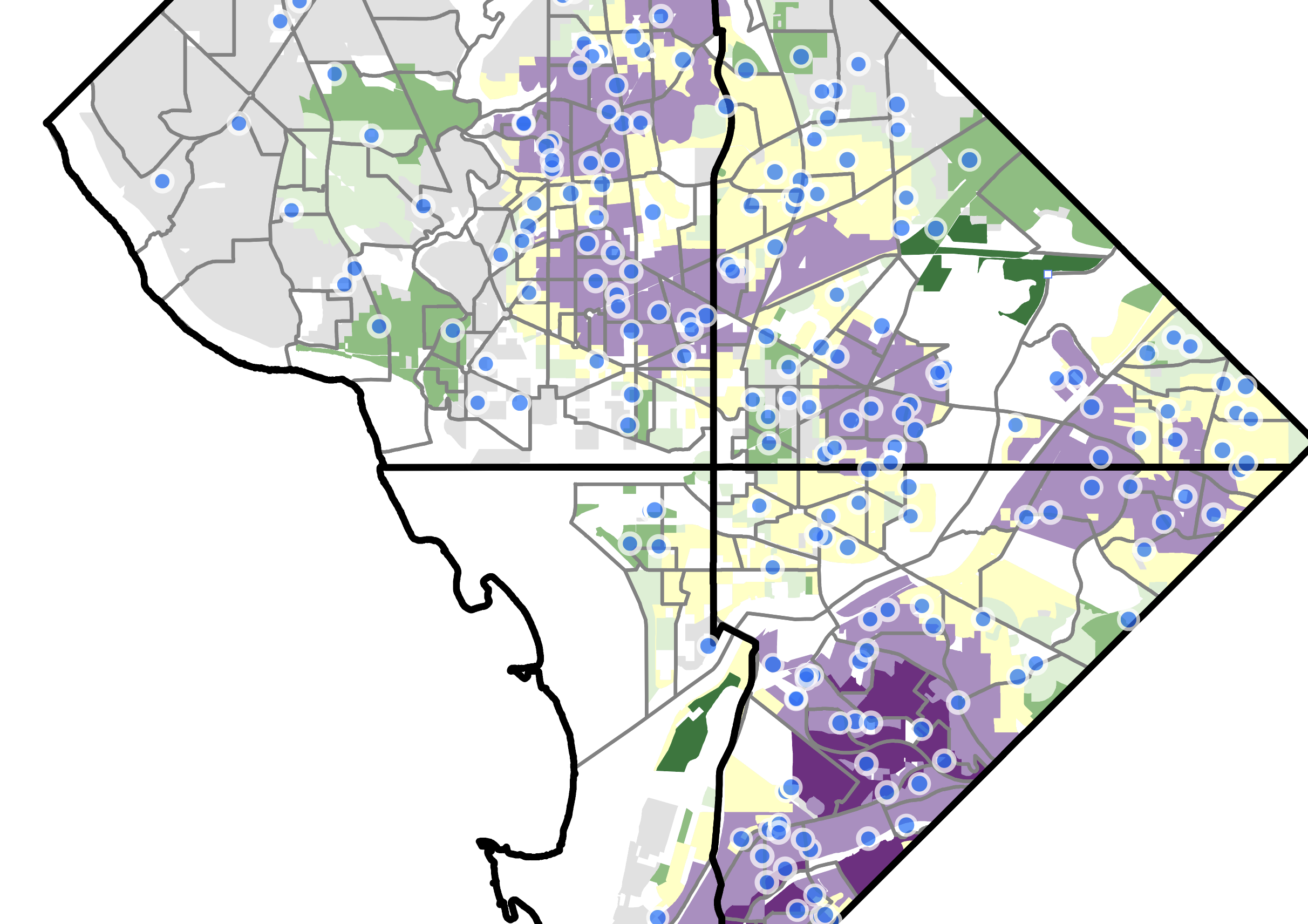
Residents in Washington’s diverse neighborhoods express markedly different opinions about the federal intervention. In parts of Ward 1, such as the U-Street area, many long-term residents note that while crimes have been reported, the overall sense of safety remains intact. For example, even with a series of shootings nearby, local business consultant Ava feels her neighborhood remains relatively secure, attesting that she comfortably walks home late into the night. Her perspective, informed by years of living in major cities, suggests that the president’s portrayal of Washington as a hotbed of dangerous activity does not match her everyday experience.
At the same time, areas like Congress Heights in Ward 8, where poverty is a higher reality, demonstrate a stark contrast in experience. Here, past incidents—ranging from homicides to violent robberies—have left an indelible mark on the community. For residents like Alicia Cooper, a property manager, the increased federal presence brings a reassurance that often counters the off-putting history marred by violent crimes. Cooper, who supports the president’s decision, suggests that the layered command structure provided by the arrival of federal agents ensures a higher degree of accountability from law enforcement.
The juxtaposition between these communities underscores the importance of context when evaluating federal decisions. On one side, a gentrifying neighborhood experiences a level of safety that makes stringent federal measures seem excessive. On the other side, communities that have borne the full brunt of crime events welcome additional support with open arms, even if the cost is a visibly militarized street presence.
Crime Statistics: A Closer Look at the City’s Numbers
Analysts agree that while Washington D.C. has faced its share of violent incidents, the official crime statistics paint a nuanced picture. Data from the U.S. Justice Department has noted a 30-year low in violent crime across the district last year—an essential point that contrasts with the public rhetoric of escalating turmoil.
To clarify the landscape, consider the following table summarizing key crime statistics in selected neighborhoods:
| Neighborhood (Ward) | Reported Homicides | Reported Robberies | Change from Previous Year |
|---|---|---|---|
| Ward 1 (U-Street) | 7 | 166 | Down nearly 30% |
| Ward 8 (Congress Heights/Anacostia) | 38 | Data not consolidated | Higher than Ward 1 by nearly fivefold |
This table illustrates the differing challenges faced by various communities. While overall violent crime rates have declined—a point often overlooked by critics of the federal strategy—the disproportionate impact on poorer neighborhoods cannot be ignored. In essence, the data prompts us to dig into the subtle parts of a multi-layered issue, where surface-level statistics hide the deeper, more confusing bits of localized crime trends and social justice concerns.
Political Implications: Is There a Power Play at Work?
Critics of the federal deployment suggest that the move is primarily about showcasing presidential power rather than addressing the nerve-racking challenges posed by crime. Joe McLean, a local lawyer, argues that a visible show of force rarely achieves lasting change in crime rates. According to McLean, the decision to deploy soldiers and federal agents does not denote a genuine attempt to reduce crime, but rather works as a statement intended to subjugate a community that has historically been underrepresented politically.
McLean’s perspective highlights a prevalent narrative among certain legal scholars and community advocates—one that views Washington D.C. not merely as a location with a fluctuating crime rate, but as a battleground for broader issues of civil rights and racial equity. The argument goes that the addition of federal forces in predominantly minority neighborhoods might create further tension, thereby complicating the already tangled issues surrounding law enforcement and community trust in these areas.
Moreover, the fact that crime numbers in several parts of Washington have actually seen improvements raises doubts about the necessity of such a heavy-handed approach. In a context where there is clear evidence of a downtrend in violent crime, the decision potentially becomes less about public safety and more about wielding power in a politically charged atmosphere.
Analyzing Federal Oversight: Balancing Security with Civil Liberties
The core of this debate resides in the attempt to balance the need for effective policing with the protection of civil liberties—a balance that has proven to be a tricky part of governance. Under federal oversight, local law enforcement agencies face challenges in retaining their autonomy and in addressing the fine points of community-oriented policing. This new layering of authority introduces additional twists and turns that can lead to conflicts between federal expectations and local realities.
Here are some key areas of concern:
- Coordination between Agencies: The integration of federal and local operations often brings with it a series of tangled issues. Effective communication protocols and shared jurisdictional guidelines become essential to avoid overlap or friction.
- Civil Rights Implications: There is the ongoing worry that an overbearing federal presence could lead to infringements on the civil liberties of citizens, especially in communities already on edge. The fine points of constitutional rights must be observed at all times.
- Public Perception: The appearance of military-grade enforcement can be both reassuring to some and deeply intimidating to others. Balancing these perceptions is critical in maintaining public trust in the law enforcement community.
When asked to take a closer look at the issue, legal experts have suggested that federal oversight should be implemented with a great deal of care. It is essential to ensure that such measures do more to protect citizens than to generate fear among those most vulnerable to over-policing.
Understanding Community Sentiments: Safety Versus Power Display
The community responses to this federal intervention are neither monolithic nor solely dictated by political allegiance. Instead, they provide a spectrum of opinions that reflect local histories, recent events, and individual experiences. In wealthier or gentrifying neighborhoods, residents have long been accustomed to a certain level of safety and personal security. To them, the continued presence of local law enforcement has historically been sufficient, making the sudden influx of federal agents seem like an unnecessary escalation.
For residents in other areas, particularly those that have experienced stark episodes of violence, the enhanced federal presence is seen as a welcome reinforcement. Alicia Cooper, for instance, recounts a traumatic incident and sees in the President’s decision a promise of increased vigilance—a kind of extra shield against potential violence. Such perspectives highlight the multitude of priorities across Washington D.C.’s communities, where each group measures safety and security through the lens of its own unique set of experiences.
When we compare sentiments, the opinions can be summarized as follows:
- Residents in Gentrifying Areas: Generally view the federal intervention as an over-the-top measure that does not fully align with their day-to-day experiences of safety.
- Residents in High-Crime Areas: Often support the move, seeing it as a critical step toward ensuring broader security and oversight. For many, the comforting thought of “someone higher up” keeping an eye on things is reassuring.
- Legal and Community Activists: Frequently challenge whether the heavy deployment of federal forces is the right path, warning that it might do more harm by worsening existing tensions and eroding trust between communities and law enforcement.
This diversity of opinion underlines the fact that when we figure a path toward a safer community, there is no one-size-fits-all strategy. Each neighborhood faces its own set of challenges, making broad-brush policies especially difficult to implement effectively.
Historical Context and the Evolution of Crime in Washington D.C.
To truly understand the current scenario, one must take a deeper look into the historical context of crime and policing in Washington D.C. Over the past decades, the city has seen dramatic shifts in both its demographic landscape and its law enforcement strategies. The transformation of neighborhoods, coupled with evolving crime patterns, has created an environment that is continuously shifting—both in terms of public sentiment and the raw statistics of violent incidents.
For a long time, Washington D.C. was depicted as a city troubled by high rates of violent crime. However, recent official statistics tell a different story—one where violent crimes have decreased substantially, despite sporadic incidents that continue to make headlines. This apparent contradiction—between public perception and documented trends—forces policy makers to reexamine the efficacy of their established methods.
This retrospective view invites us to consider several fine points of urban evolution:
- Shifts in Demographics: Gentrification has altered the socio-economic composition of previously neglected neighborhoods, leading to improvements in local education, employment, and overall social infrastructure.
- Law Enforcement Innovations: New strategies in community policing and enhanced use of technology have contributed to a decline in violent crimes, even as some outdated practices persist in pockets of the city.
- Economic Transformations: The economic recovery in certain districts has played a significant role in lowering crime rates, offering residents new opportunities and reducing the conditions that often breed criminal activity.
Although these improvements are real, the legacy of past challenges remains. That legacy informs today’s debate on whether a heavy federal presence is necessary, or whether a return to localized, community-driven policing might suffice in sustaining the gains made over recent years.
Fine Points of Legal Oversight: The Intersection of Local and Federal Law
One cannot ignore the legal implications that arise when federal authority steps into what has traditionally been the domain of local law enforcement. The shift in command and oversight means that the subtle parts and little details of constitutional rights and local jurisdiction become critical topics for discussion. There are several legal questions at play:
- How does federal supervision interact with local policies that have been developed over years of community engagement?
- What are the legal safeguards in place to ensure that the rights of citizens are not compromised by a rapid change in leadership?
- To what extent can federal oversight be modified to respect the “small distinctions” in local needs without diluting the overall mission for effective law enforcement?
Legal experts emphasize that, while the goal of protecting public safety is super important, it must not come at the expense of eroding trust between the community and law enforcement. They argue that a balance must be struck, one which steers through the confusing bits and tricky parts of overlapping jurisdictions. The application of federal law in a district known for its rich history of local advocacy requires that policymakers pay attention to the nitty-gritty—the hidden complexities—that can make or break community confidence in the justice system.
Community Policing Versus Federal Control: Finding a Middle Ground
A recurring theme in discussions around federal deployments is the debate over community policing versus a more centralized, federal-run approach. Proponents of local control maintain that community policing tactics, honed over years of engagement, are better suited to handle the subtle parts and small distinctions in neighborhood dynamics. They credibly argue that local officers, who have often built personal relationships with the community, are in a better position to address issues the fine shades of urban life.
At the same time, advocates for federal oversight claim that a uniform application of force, which leaves little room for local bias, can help ensure that all areas receive consistent attention. They point to the statistical improvements in violent crime as evidence that enhanced measures can work effectively when properly coordinated.
Reconciling these positions is not an easy task, as each approach has its own set of challenges and benefits. To understand this interplay, consider the following benefits and concerns associated with each method:
| Approach | Benefits | Concerns |
|---|---|---|
| Community Policing |
|
|
| Federal Oversight |
|
|
This breakdown illustrates that there are no easy answers in determining which approach best serves both security and the preservation of civil liberties. Both sides of the debate underscore the need to figure a path forward that not only protects public safety but also respects the subtle details of community trust and local autonomy.
Examining the Long-Term Effects on Community Trust
The deployment of federal forces in Washington D.C. is likely to have a lasting impact on how citizens perceive both local and federal law enforcement. While some residents celebrate the reinforced security as a much-needed improvement, others worry that the presence of armed federal agents could permanently alter the relationship between everyday citizens and their protectors. The potential long-term effects are loaded with issues that will require careful reflection by policymakers and community leaders alike.
For many residents, particularly those in neighborhoods with a fraught history of heavy-handed policing, the visual impact of troops and federal agents on the streets is not merely symbolic. It could signal a shift in the way government authority is exercised—a move that politicizes the idea of safety and security. Such a display of power has the potential to widen the gap between law enforcement and the communities they serve—a gap that is already marked by a range of subtle differences in expectations and experiences.
To illustrate the possible outcomes, consider these potential long-term effects:
- Community Alienation: In neighborhoods where residents have long-modeled trust through local engagements, a drastic change in policing style might push them further away from cooperation.
- Civil Liberties Concerns: The shift in command structure could lead to scenarios where local nuances and individual rights are not as carefully protected, leading to public outcry.
- Political Polarization: When citizens feel that federal interventions are politically motivated, it may deepen existing divisions, making bipartisan cooperation on security reforms even more challenging.
Understanding these outcomes is super important—especially for political leaders who must balance short-term security needs against the long-term health of civic engagement and trust. Sorting through these challenges calls for a coordinated strategy, one that respects both the need for decisive action and the right of communities to feel safe without being overwhelmed by a militarized state presence.
Future Perspectives: Reforming Urban Policing Strategies
Looking forward, it is clear that Washington D.C. must consider reforms that focus not only on immediate crime reduction but also on building a system that is resilient in addressing the detailed parts of urban life. The current federal intervention, while a major signal of presidential power, also raises broader questions about how best to manage tricky parts of community safety in an evolving urban landscape.
There are several strategic avenues that lawmakers and community leaders might explore:
- Enhanced Local-Federal Coordination: Establishing a task force that includes both local police and federal representatives can help create protocols that effectively respond to crime without compromising civil liberties.
- Community-Led Safety Programs: Initiatives that support community policing can be expanded, offering residents a greater role in designing and overseeing local security policies.
- Transparent Data Sharing: Public access to detailed crime statistics and strategy evaluations can help foster a dialogue grounded in the real, measurable data of community safety, rather than on politically charged narratives.
- Policy Reviews and Legal Safeguards: A comprehensive review of the overlapping legal jurisdictions and federal oversight mechanisms is necessary to ensure that rights are fully protected as new approaches are trialed.
These reforms, if implemented properly, could find your way to a balanced approach that respects the community’s need for personal security while ensuring that effective governance remains a priority. It is critical that any new policy framework addresses the hidden complexities and nerve-racking uncertainties involved in blending federal oversight with local policing traditions.
Evaluating the President’s Rhetoric and Its Implications
Throughout this crisis, one cannot overlook the power of presidential rhetoric in shaping public perception. The language used by political leaders in describing crime and public safety can often swing public sentiment dramatically. When President Trump referred to Washington D.C. as being plagued by violent activity, his words fueled both support and opposition. For supporters of the federal intervention, his statements resonated as a concise explanation of the challenges facing the city. For critics, however, his rhetoric came across as an exaggeration—a tactic to justify a heavy-handed display of power in a politically charged arena.
Political observers agree that such bold language is designed to set the stage for policy initiatives that might otherwise meet with significant resistance. By framing the issue in stark terms, the administration aims to rally support among those who may be worried about the safety of their neighborhoods. Yet, as our analysis shows, Washington D.C. is a city of many contradictions—a place where official crime statistics and local perceptions do not always align. In this context, it remains uncertain whether the president’s rhetoric will have lasting benefits for the city’s overall security or if it will simply add another layer of tension to an already delicate situation.
This divergence between narrative and reality invites us to reflect on the role of political language in legal and administrative matters. A show of force, no matter how impressive, may not address the subtle details of managing urban crime effectively. Instead, a more measured, evidence-based approach to public safety could foster lasting improvements that both protect citizens and preserve the cherished values of local governance.
Conclusion: Striking a Delicate Balance in Urban Policing
The deployment of National Guard troops and federal agents in Washington D.C. exemplifies one of the many challenging, tangled issues that modern urban governance must contend with. On one side, there is the undeniable need to ensure that communities ravaged by crime feel protected. On the other side, there is the risk that an overpowering federal presence might lead to unintended consequences for civil liberties, local autonomy, and ultimately, community trust.
As we take a closer look at the matter, it is important to recognize that no single solution exists for a problem loaded with issues. Community policing models that have traditionally provided a sense of familiarity and trust must now coexist with new layers of federal oversight. The challenge for policymakers is to figure a path that leverages the fine points of both approaches, ensuring that security measures do not inadvertently alienate the very citizens they are meant to protect.
In our opinion, the future of urban policing in Washington D.C.—and indeed in major cities across the country—lies in an honest evaluation of what works and what does not, based on careful examination of the twisting lines between public safety and authoritarian oversight. It is super important to bear in mind that the ultimate goal should be to build a system where every community, whether in a gentrifying area or a historically under-resourced neighborhood, feels secure and valued.
By remaining committed to transparent data sharing, legal safeguards, and genuine community engagement, Washington D.C. can chart a course that turns this period of tension into an opportunity for meaningful reform. The balance between a reassuring sense of security and the preservation of civil rights is delicate—and the authorities need to steer through these tricky parts with wisdom, restraint, and a deep commitment to democratic values.
As debates unfold and strategies are reassessed, it remains clear that the conversation about crime, community oversight, and federal authority is far from over. What is certain, however, is that every decision taken in these nerve-racking times must reflect the great responsibility of protecting not only lives but also the enduring principles of justice and equity. The insights we gain today could well shape the legal and social framework for generations to come.
Looking Ahead: Policy Recommendations for a Secure and Just Future
Given the range of viewpoints and the mixed outcomes of past strategies, it might be time to revisit the policy framework governing urban policing. Here are some key recommendations for moving forward:
- Create a Unified Command Structure: Establish a joint task force that incorporates both federal and local law enforcement experts to design protocols that adequately reflect the subtle details of each community’s needs.
- Invest in Community Programs: Increase funding for community-led initiatives that not only focus on crime reduction but also foster neighborhood cohesion. Examples include local safety committees, neighborhood mediation programs, and community watch groups.
- Implement Regular Public Reviews: Hold public forums and reviews where citizens can provide feedback on the performance of both local and federal law enforcement. This will help keep the accountability chain transparent and responsive.
- Prioritize Data-Driven Policy Making: Use comprehensive crime statistics and success stories from various neighborhoods to shape a proactive policy that is flexible, nuanced, and truly reflective of urban realities.
By prioritizing these recommendations, policymakers can work to ensure that security measures are not only effective but also respectful of the diverse histories and personal experiences within Washington D.C. It is critical that government authorities take time to get into the nitty-gritty of these issues and understand that long-term success will depend on collaborative efforts grounded in mutual respect and transparency.
This is a defining moment for urban policy in America. As cities continue to evolve, the legal community, together with citizen advocates, must work to chart a course that integrates federal oversight with strong, grassroots community policing. Only by embracing the full spectrum of perspectives—while remaining committed to the ideals of justice and democratic accountability—can we hope to secure a safer, more equitable future for all residents.
Final Thoughts: Embracing a Balanced Vision for Urban Security
The debate over federal intervention in Washington D.C. is emblematic of a much larger discussion about the role of government in managing the complicated pieces of modern society. While immediate concerns about crime cannot be ignored, it is equally important to preserve the spirit of local autonomy and ensure that measures taken today do not jeopardize the civil liberties and community bonds that define a truly democratic society.
The twists and turns in this case exemplify the need for a balanced and thoughtful approach to public safety—one that makes room for local insights while recognizing that, sometimes, federal support may be super important. As we reflect on the current developments, it is clear that the path forward must be paved with careful planning, robust community engagement, and a deep understanding of the intricate dynamics at play.
This opinion piece is not meant to serve as a definitive answer but rather as a call to action for all stakeholders—politicians, law enforcement officers, legal experts, and everyday citizens—to engage in an open debate about the future of urban policing. By working together and respectfully addressing both the reassuring aspects and the more intimidating challenges inherent in such a system, we might just find a way to create a model of urban security that stands the test of time.
As Washington D.C. navigates these turbulent times, let us remember that true security cannot be achieved solely through the heavy hand of authority. It must be earned through trust, dialogue, and a persistent commitment to resolving even the most confusing bits of urban life with justice and care. Only then can we embark on a future where every resident feels both safe and empowered—a future built on a foundation of transparency, accountability, and unwavering respect for individual rights.
Originally Post From https://www.kjzz.org/npr-top-stories/2025-08-14/crime-is-down-in-washington-d-c-but-still-a-reality-in-some-neighborhoods
Read more about this topic at
Promoting Justice and Public Safety Since the Pandemic
Public Safety