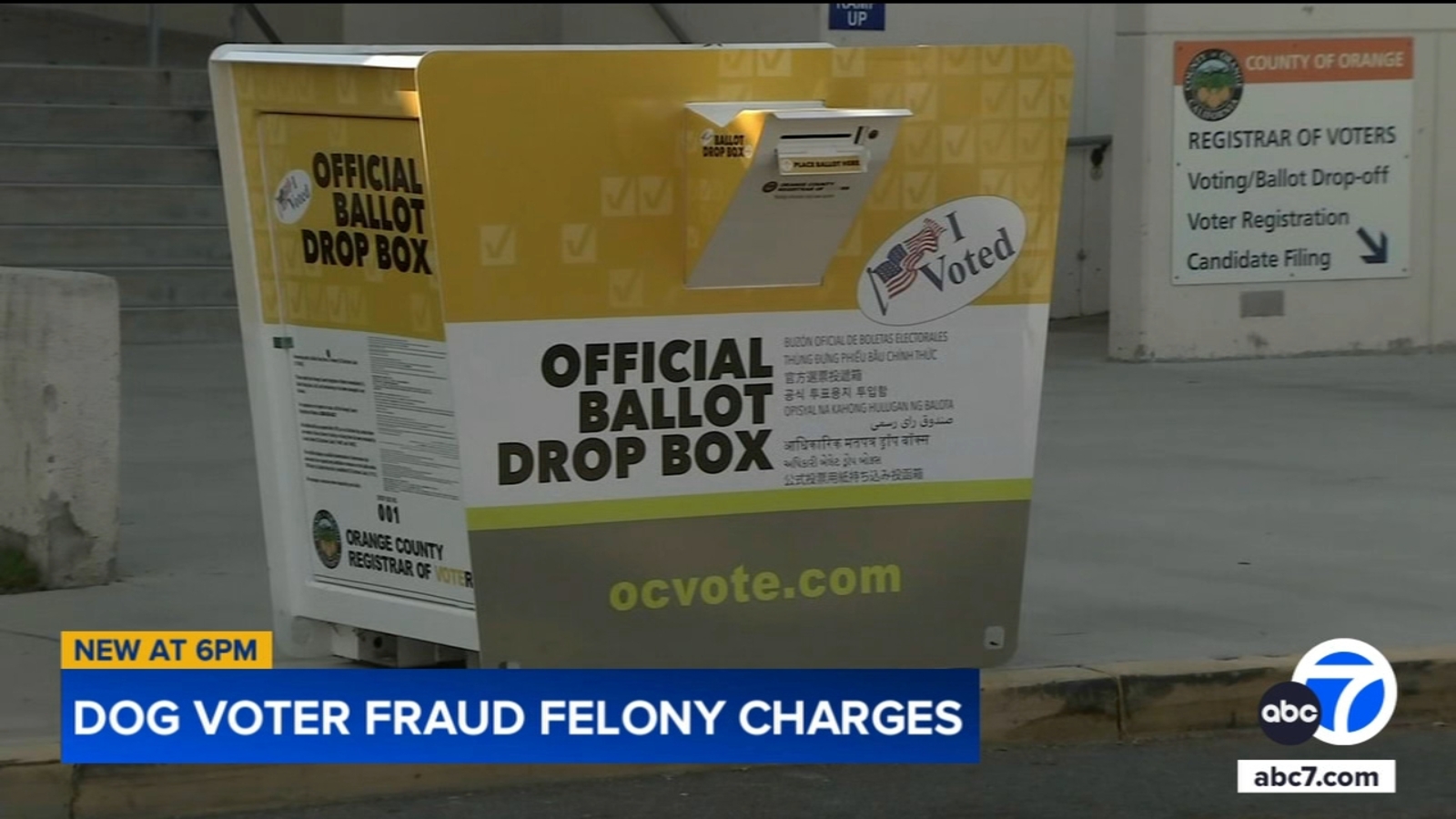
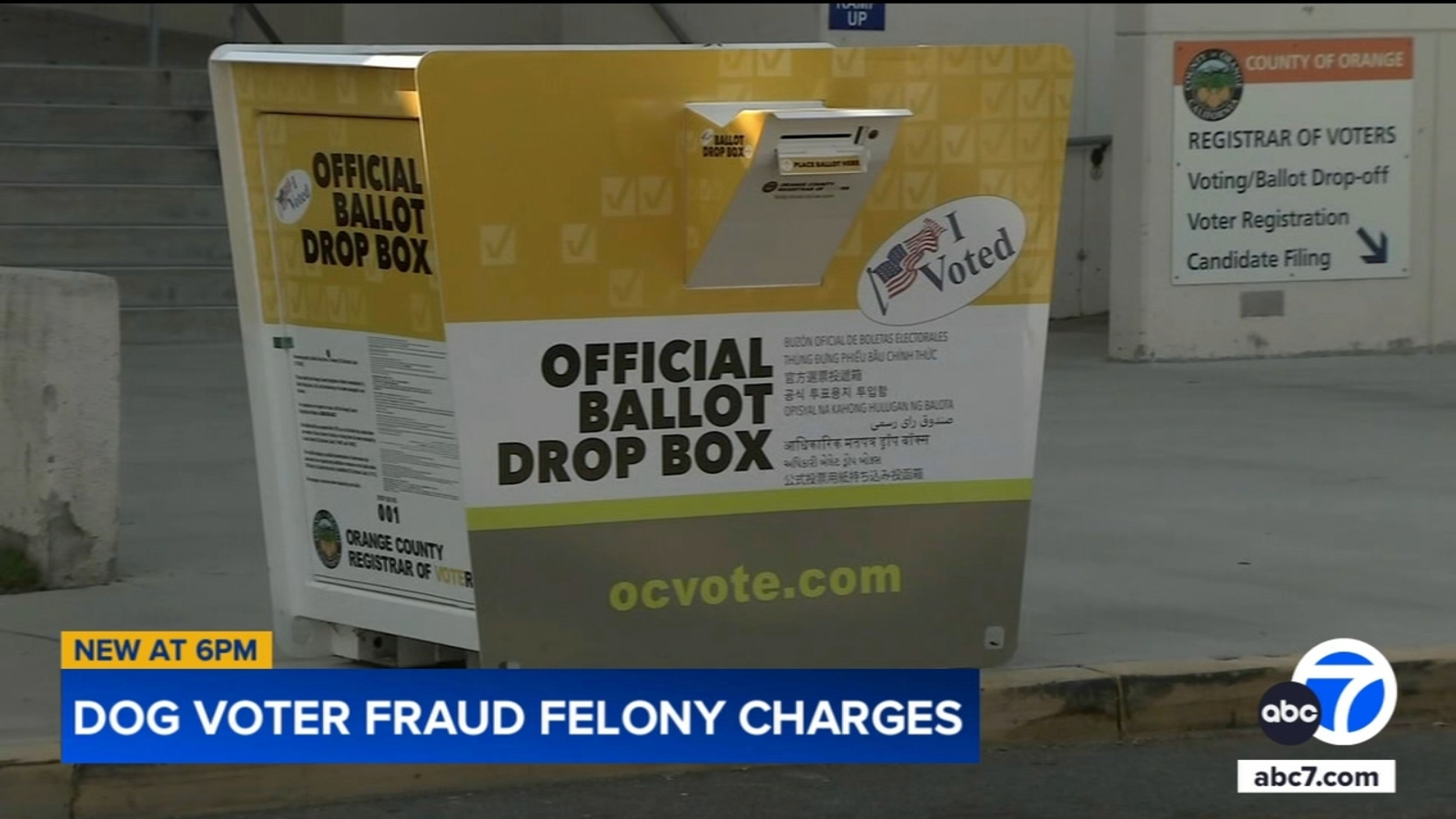
Opinion: The Unconventional Case of a Dog Casting a Vote
The recent legal controversy in California—where a woman is accused of registering her dog as a voter and casting a ballot using her pet’s identity—offers a striking example of the tangled issues and subtle twists inherent in our modern electoral system. This case, involving Laura Lee Yourex, opens up a broader discussion about voter registration rules, the limits of identification requirements, and the potential dangers of exploiting legal loopholes. In this editorial, we dive into the story and its broader implications, using everyday language to parse through the tricky parts of election fraud allegations.
While many have dismissed the case as a quirky or isolated event, it illuminates the nerve-racking challenges facing regulators, political observers, and the public alike. The story isn’t just about a pet’s participation in an election; it raises questions about how we define identity, how strict our verification procedures should be, and, ultimately, how we ensure our democratic processes remain free of manipulative practices.
Legal Background and the Registration Rules
The charges faced by Yourex—ranging from unlawfully casting a ballot to perjury and falsifying documents—reflect more than just a case of a misused pet identity. They highlight some of the confused bits of our state and federal voter registration system. In California, the rules for state elections have been historically more relaxed, which allowed an individual to register without verifying residency or providing detailed identification. However, when the same individual attempted to leverage her pet’s identity in a federal election, stricter requirements came into play.
This duality underscores the contrast between state-level and federal election rules:
- State Elections: More lenient requirements that may allow the registration of an animal’s name under loose guidelines, whether by accident or design.
- Federal Elections: Procedures where first-time voters must provide proof of residence and identity, curbing any attempts to use a non-human identity.
The incident raises the question: How can a system that functions without stringent checks for state elections coexist with a federal process that demands precise documentation? This discrepancy creates several vulnerable spots within the broader electoral framework, leaving room for exploitation in ways that are both confusing and full of problems.
Understanding the Finer Details of Electoral Loopholes
One of the key areas to examine involves the subtle details and hidden complexities within voter registration laws. The case of a pet registered as a voter is not just a bizarre anomaly; it is a manifestation of gaps in our legal processes. These gaps, or the little twists in the system, are not always evident to the general public or even to lawmakers who work tirelessly to balance accessibility with security.
Some of the fine points of this case include:
- Verification Requirements: The absence of mandatory proof of residence during state registrations created a window of opportunity—an opportunity that could be exploited by those intentionally trying to subvert the system.
- Digital vs. Manual Systems: With the growing reliance on digital databases and online registrations, minute errors or oversights in system design can lead to significant misinterpretations. When the responsibility of verifying identity is delegated to automated or semi-automated systems, the potential for error multiplies.
- Oversight and Accountability: The way in which registrars track and verify voter identities is crucial. In this instance, the self-reporting aspect, where Yourex registered her dog without immediate oversight, spotlights the potential for tricky manipulation.
Table 1 below offers an organized view of the charges brought against the defendant, along with a brief interpretation of each allegation:
| Charge | Description |
|---|---|
| Casting a Ballot When Not Entitled to Vote | Using an animal’s identity instead of a human’s to submit a vote, thus bypassing legal voter requirements. |
| Perjury | Providing false statements or misinformation during voter registration or subsequent proceedings. |
| Falsification of Documents | Offering a false or forged document to register a non-existent individual as a voter—here, the pet. |
| Registering a Non-existent Person | Listing a pet as a legitimate voter, which challenges the conventional criteria of identity and residency. |
These charges represent key legal points that can serve as catalysts for broader reform discussions. When a case that seems to border on the ridiculous exposes tangible loopholes in how we record and verify voter identities, it demands a reevaluation of the structures that support our democratic process.
Electoral Integrity in the Digital Age
The evolution of technology and the move towards online voter registration have brought both enhanced convenience and shadowed risks. The digital era has made it easier for eligible voters to exercise their rights, while simultaneously increasing the potential for errors and even intentional manipulation.
Here are some of the critical challenges posed by technological advancement:
- Data Sharing and Privacy: The rapid exchange of personal information in digital forms can complicate accountability and tracking. When registration data flows between local and federal systems, each platform’s verification methods may differ, contributing to mismatched records.
- System Vulnerabilities: As systems become more interconnected, a single vulnerability—such as the lack of an initial identity check—can have cascading effects that undermine the entire registration process.
- Public Trust: Incidents like these might erode trust in electoral systems. If the public believes that the voting process is ripe for manipulation, regardless of the extent of the fraud, it could lead to skepticism and reduced voter participation.
Addressing these challenges means not only embracing innovative technological solutions but also keeping an eye on the nerve-racking, often overwhelming regulatory environments. In this labyrinth, lawmakers must figure a path that balances accessibility for genuine voters with robust safeguards against fraudulent practices.
Weighing the Consequences: Ethical Implications and Voter Confidence
Beyond the technical and legal dimensions, this event stirs up interesting debates about ethics in voting. Even if the actual number of such fraud cases is relatively low—as suggested by historical data from sources like the Heritage Foundation, which noted 69 known cases in California since 1982—the perception of election fraud can linger as a tense and loaded issue for decades.
Some key ethical questions include:
- Risk vs. Reward: Is it ethical for a system designed to encourage participation to be so vulnerable that it might inadvertently reward creative, albeit improper, interpretations of the law?
- Impact on Legitimate Votes: How do cases like these affect the overall confidence of the electorate in ensuring that every valid vote counts? Dishonest practices—no matter how isolated—can throw a shadow over the hard work of millions of citizens.
- Proportionality of Punishment: If convicted, Yourex faces up to six years in prison. How do legal experts and the public grapple with such significant penalties in cases where the offense might seem as eccentric as it is subversive?
Ultimately, ethical debates in electoral law aren’t just about the spell-binding details of one case. They reflect a larger struggle to define fairness and maintain the integrity of the democratic process. The public’s trust hinges on the belief that elections are free and fair, and when a high-profile case like this comes to light, it forces regulators to reassess existing protocols.
Political Implications and the Debate Over Electoral Reform
Instances like these serve as a wake-up call for policymakers at all levels. Critics argue that if even a single case of dubious voter registration can undermine confidence in our electoral systems, then there is an urgent need to rework the procedures and tighten the verification process. Conversely, some advocates for voter accessibility contend that increased verification measures could suppress participation among genuine voters, particularly in communities with fewer documentation resources.
This debate can be broken down by several key points:
- Ensuring Access vs. Security: How do we strike the right balance between making voting accessible and creating buffers against fraud? The tension between these two goals is one of the most challenging parts of modern electoral system design.
- Uniformity vs. Flexibility: Should rules across all elections (state and federal) be standardized to reduce the likelihood of loopholes, or do we need different standards to accommodate the varying contexts of local governance versus national oversight?
- Transparency in Regulations: Trust is built on clarity. The public deserves to know how their votes are verified and what procedures are in place to catch any attempts at fraud—however off-putting the process of oversight might seem.
Table 2 below outlines some potential policy reforms that could address the current gaps in our electoral system:
| Policy Reform | Potential Benefit | Possible Concern |
|---|---|---|
| Stricter Identity Verification | Reduces opportunities for non-human registrations | May create barriers for eligible voters lacking traditional proof |
| Integrated Digital Databases | Ensures consistency between state and federal registries | Raises concerns over data privacy and security |
| Regular Audits and Oversight | Builds public trust in election integrity | Requires ongoing resources and could slow down registration processes |
| Public Education Campaigns | Clarifies the legal process to potential voters | May be costly and time-consuming |
Regardless of the specific measures adopted, it is clear that the system must evolve to close the gaps that allow even the most bizarre loopholes—like registering a pet—to exist. The initiative to strengthen electoral integrity is not intended to intimidate legitimate voters but to ensure that every vote cast is genuine and that electoral outcomes truly reflect the will of the people.
Poking Around the Legal System: The Role of the Courts and Prosecutors
As we take a closer look at the legal maneuverings in this case, it is important to acknowledge the role that the judiciary and prosecutors play in clarifying what is acceptable in the electoral process. The Orange County District Attorney’s Office, by taking strong action against Yourex, is setting a precedent that may ripple across other jurisdictions.
Prosecutors have the challenging task of not only proving that the law has been broken but also ensuring that their cases withstand intense public scrutiny. For example, using social media posts as evidence—such as a picture of the dog wearing an “I voted” sticker or captions that suggest eligibility despite the animal’s demise—is both a modern twist and a demonstration of how digital evidence is now a crucial component in legal cases.
From a legal standpoint, this case exemplifies several tangled issues:
- Admissibility of Social Media Evidence: Modern courtrooms are increasingly faced with the need to interpret digital footprints. What is posted on social media is now under the microscope, and juries must contend with evidence that is as accessible as it is potentially manipulated.
- The Concept of Identity: Traditionally, identity has been intrinsically linked to physical human attributes. However, cases like this challenge traditional views and force the legal system to address what it means for an entity to be “eligible” to vote.
- Proportionality of Punishment: Although six years in prison may seem overwhelming for some, the heavy sentence proposed is balanced against precedents for similar offenses. It’s a reminder that even though the act might sound eccentric, the underlying legal and ethical standards are treated with earnest seriousness.
In evaluating whether the punishment fits the crime, legal scholars and the public alike are prompted to consider broader questions of deterrence and fairness: Does a drastic penalty serve to reassure the public in the short-term, or might it inadvertently discourage genuine voter participation? These are little twists in the debate that require careful, balanced discussion.
Public Perception and Media Coverage: The Double-Edged Sword
Media coverage of cases like this plays an essential role in shaping public perception about electoral integrity. On one hand, detailed reporting helps inform the community about the legal processes and potential flaws in the system; on the other, sensational headlines can sometimes distort the real issues involved.
There is no doubt that the story of a woman and her dog creates a compelling narrative that grabs headlines and social media buzz. However, this fascination risks obscuring the underlying, technical problems that allowed such an incident to occur in the first place. Some of the media’s most confusing bits include:
- Sensationalism vs. Substance: While quirky headlines attract readership, they can undermine serious discussions about electoral reforms and legal standards.
- Contextual Gaps: Articles focusing solely on the humorous aspects of the case may neglect to mention that, although rare, such loopholes harm public trust and require remediation.
- Public Reaction: In a digital age where every unusual twist spurs online debate, critical nuances may be lost amid a flood of memes and casual commentary, thus blurring the fine shades of legal accountability.
It is important for media outlets to strike a balance between reporting on the off-beat details and responsibly conveying the super important elements of legal reform and electoral integrity. Transparent reporting can help demystify the legal system and encourage public discourse on how best to protect our democratic institutions.
Addressing the Overwhelming Concerns: Reforming Voter Registration Systems
At the heart of this issue lies the question of whether our current voter registration systems are robust enough to handle both traditional forms of fraud and the emerging, unexpected methods of manipulation that digital technology enables. While it might seem overwhelming to figure a path forward when faced with such challenging twists and turns, the solution lies in a multi-faceted approach.
A reform strategy might include:
- Upgrading Verification Technologies: Leveraging the latest available technologies can help in catching errors before they escalate into major issues. Improved biometric verification and enhanced identity databases can work together to reduce the vulnerable points that allow fraudulent registrations.
- Standardizing Registration Protocols: Uniform guidelines across state and federal levels can help minimize discrepancies. When every jurisdiction applies similar rules, it becomes easier for both authorities and the public to have confidence in the process.
- Continuous Training for Registration Officials: Educating those who manage registration systems about the tricky parts and little details hidden in evolving technologies is key. Regular training sessions can keep everyone ahead of new threats, ensuring they know how to steer through potential loopholes.
- Public Engagement Initiatives: Informing the public about how voter registration works can lead to more informed participation. Transparent communication can also encourage citizens to report irregularities without fear of being dismissed as overreacting.
Each of these steps, while seemingly minor in isolation, plays a critical role in ensuring a secure, fair electoral process. They help to mollify concerns that can feel both intimidating and overwhelming, providing clear, practical means of managing the evolving challenges posed by digital registration systems.
Lessons Learned: The Broader Impact on Democracy
This case is a wake-up call across the political landscape. While it might be tempting to dismiss a bizarre instance of registering a pet as a voter as an isolated anomaly, its implications run much deeper. The incident forces a closer look at how legal standards are set and maintained within our electoral framework.
Some of the broader lessons include:
- Rigorous Standards for Verification: Even if the number of similar incidents is small, the existence of such loopholes challenges public confidence. Consistent standards can reassure voters that every ballot is legitimate.
- Adapting to Technological Change: As registration processes continue to migrate online, authorities must adapt quickly. Staying ahead of potential abuses requires constant review and technological upgrades.
- Balancing Accessibility with Security: It is all too easy to tip the scales too far in favor of accessibility. Yet, unchecked ease can lead to unintended consequences—an equilibrium between access and robust legal safeguards is a must-have for any functioning democracy.
- The Importance of Public Trust: Voting is a cornerstone of democracy. Each incident that undermines trust, even if sensational, can have long-term effects on voter participation and engagement.
Reflecting on these outcomes, one sees that the dog vote case is emblematic of the hidden pitfalls lurking within even the most established institutions. It is a reminder that governance, much like technology, is continuously evolving, and that staying static in the face of change is not an option.
Future Directions: Charting a New Course for Election Integrity
Looking ahead, policymakers and technologists alike must take the necessary steps to address these confusing bits and tangled issues. As part of a comprehensive reform agenda, stakeholders might consider organizing public forums, developing cross-jurisdictional committees, and commissioning independent reviews to study the current registration process.
A potential roadmap for future reforms could include:
- Creating Interagency Task Forces: Panels comprising legal experts, technologists, and civil rights advocates can work through the subtle details of voter registration. These groups would be responsible for offering balanced recommendations that account for both voter access and systemic security.
- Implementing Pilot Programs: Before rolling out sweeping changes, smaller-scale pilots can be conducted in select regions. These programs would provide a controlled environment to test new verification methods and gather data on how they perform under real conditions.
- Enhancing Public Reporting Channels: Formal mechanisms for reporting fraudulent activities could be strengthened. Allowing everyday citizens to alert authorities about dubious registrations without fear of reprisal would inject an extra layer of community oversight into the system.
- Legislative Reforms: Lawmakers should consider amending existing statutes to close current loopholes. By clarifying definitions around identity and eligibility, the law can adapt to new technological realities while preserving democratic freedoms.
Table 3 summarizes these future directions, highlighting the potential benefits of each approach:
| Initiative | Benefits | Challenges |
|---|---|---|
| Interagency Task Forces | Comprehensive oversight; diverse perspectives | Coordination across departments; potential bureaucratic delays |
| Pilot Programs | Testing under real-world conditions; data-driven adjustments | Limited scope initially; scalability concerns |
| Enhanced Reporting Channels | Empowers citizens; serves as an early warning system | May require increased funding and training |
| Legislative Reforms | Clear legal standards; reduces loopholes | Slow process; potential political resistance |
Each approach has its own set of obstacles, but when integrated into a coherent strategy, they represent a meaningful way forward. Implementing these solutions may feel a bit intimidating at first, especially given the nerve-racking nature of overhauling long-established systems. However, the need for a secure and trustworthy electoral process is a responsibility that no democracy can afford to neglect.
Conclusion: Finding Your Way Through a Changing Electoral Landscape
As we reflect on the unusual case of a dog registered as a voter, it is clear that this incident is emblematic of broader issues in our electoral system. The story is not simply a quirky legal footnote, but a catalyst prompting us to reexamine the very foundations of voter authentication, identity verification, and the safeguards necessary to protect democratic processes.
While the twists and turns of this case may seem off-putting, they also serve as a call to action for policymakers, legal experts, and citizens alike. By confronting the tangled issues head-on and considering balanced, thoughtful reforms, we can ensure that our voting systems remain robust against both conventional and unconventional challenges.
The road ahead may be filled with intimidating obstacles and nerve-racking debates, but it is essential that we figure a path that protects democratic values while embracing the modern advances of technology. In doing so, we must remain vigilant about the confusing bits and subtle details that could otherwise be exploited.
Ultimately, reforming our voter registration and verification systems is not about casting blame on past practices. Rather, it is about securing the future of democracy by addressing the little details that matter most—a future where every vote cast is genuine, every registration is verified, and every citizen can trust that their voice is heard.
This case reminds us that even in systems designed with the best intentions, the potential for abuse exists. By taking a closer look, learning from these experiences, and adapting our approaches as needed, we can strengthen the pillars of our electoral system. Such constructive progress represents the essence of democracy—a continuous process of learning, reforming, and, ultimately, ensuring that everyone’s vote counts.
In the end, while the notion of a dog casting a ballot might provoke a smile or a moment of disbelief, it should also inspire us to take the necessary steps to protect and improve our democratic institutions. The journey may be tricky, the turns may be tangled, but through collaborative effort and a commitment to transparency, we can secure an election process that is both fair and resilient for generations to come.
Originally Post From https://www.kgun9.com/politics/elections/i-voted-california-prosecutors-say-dogs-ballot-was-owners-crime
Read more about this topic at
Woman charged for registering her dog to vote
Orange County woman who registered dog to vote said …