
Pending Home Sales Report: A Critical Perspective on a Dynamic Housing Market
The latest pending home sales report reveals a 1.8% rise in May on a month-over-month basis and a modest 1.1% increase year-over-year. As the real estate landscape continues to shift, these figures offer REALTORS® and clients alike a window into the subtle twists and turns of the housing market, while also prompting deeper reflections on regional distinctions and economic forces at play.
In this opinion editorial, we take a closer look at the data, examine the underlying economic drivers, and explore the implications these trends may have for real estate professionals and consumers. By dissecting the report’s findings, we aim to help you figure a path through the tricky parts of market analysis, regional disparities, and policy debates that define today’s housing market.
In-depth Analysis of Regional Home Sales Trends in the U.S. in May 2025
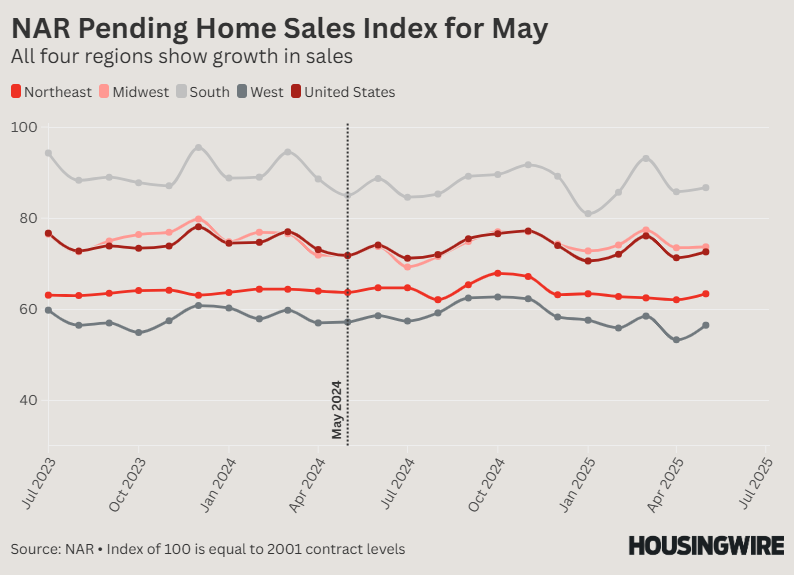
The report shows that all four U.S. regions witnessed improvements in pending home sales in the month of May. However, a more detailed breakdown suggests that not all regions are equally buoyant. The West, in particular, demonstrated an impressive 6.0% month-over-month increase, while the Northeast saw a 2.1% rise. Meanwhile, the Midwest and South experienced more modest gains of 0.3% and 1.0%, respectively.
When we take a step back, these regional statistics are loaded with subtle details. For example, despite the West’s strong monthly performance, its year-over-year increase was only 1.2% compared to the Midwest’s robust 2.6% and the South’s steady 2.0% rise. Additionally, the Northeast, while benefiting from a notable monthly boost, encountered a slight year-over-year dip of 0.5% in pending signings.
This regional segmentation underscores the importance of taking into account the local economic environment and buyer behavior patterns. In areas with greater inventory, like the South, buyers enjoy more negotiation power, whereas regions with scarcer supply, such as the Northeast, tend to see heightened competition and often higher prices due to a shortage of homes.
Key Statistics at a Glance
To further clarify the regional differences, consider the table below summarizing the data from May 2025:
| Region | Month-over-Month Change | Year-over-Year Change |
|---|---|---|
| Northeast | +2.1% | -0.5% |
| Midwest | +0.3% | +2.6% |
| South | +1.0% | +2.0% |
| West | +6.0% | +1.2% |
This snapshot not only highlights the gains in pending home sales but also illustrates the varied pace at which different markets are progressing. Understanding these differences is essential for any professional who wants to get into the details of regional trends and tailor strategies accordingly.
Understanding the Impact of Rising Wages and Mortgage Rate Fluctuations on Home Buying
According to NAR Chief Economist Lawrence Yun, consistent job gains and rising wages are helping the housing market. While this is a positive sign, it comes with its own set of tricky parts, particularly when mortgage rate fluctuations take center stage in determining homebuyers’ decisions. Mortgage rates, being the nerve-racking element in the equation, often overshadow the benefits of wage increases in making a home purchase accessible.
As rising hourly wages contribute to improved buying power, the simultaneous instability in mortgage rates challenges consumers to find their way through the financial waters. In such an environment, every small twist in interest rate policy may have a ripple effect, stressing the need for a balanced approach in both fiscal and monetary policies. This tension between wage increases and rate fluctuations is a classic case of how one positive metric can be undermined by another economic factor.
Impact Analysis: Mortgage Rate Volatility
When faced with ever-changing mortgage rates, homebuyers must:
- Monitor economic news consistently
- Seek professional advice on financing options
- Factor in potential rate hikes when planning a purchase
- Examine loan products that offer rate locks or adjustments
These steps are super important for mitigating the impact of the fluctuating mortgage market. REALTORS® have the dual role of guiding their clients through these choices while also staying current on the shifting economic landscape that influences mortgage conditions.
Examining the Subtle Details of Inventory Variations Across Regions
One of the most significant elements behind the pending home sales report is the disparity in housing supply among various regions. For instance, the Northeast is currently experiencing a pronounced shortage of homes, which is driving up prices and intensifying bidding wars. In contrast, the South benefits from relatively more available inventory, affording buyers greater discretion and the chance for price negotiation.
Understanding these hidden complexities is key. While the report illustrates that pending sales are increasing across the board, the underlying factors differ greatly. The constrained inventory in areas like the Northeast creates a scenario where properties frequently sell above the listing price, adding stress to an already competitive environment. Meanwhile, the South’s ample listings mean that even though sales are up, buyers may have the luxury of more time to make informed decisions without the pressure of rapid price escalations.
Inventory Considerations for Home Buyers
Real estate professionals recommend considering the following when analyzing local inventory levels:
- Supply and demand dynamics in the neighborhood
- Length of time properties stay on the market
- Comparative pricing trends between similar areas
- The future outlook on new construction and development projects
This approach helps both REALTORS® and clients to sort through the confusing bits of market data and develop a strategic plan aimed at maximizing investment potential while remaining realistic about current market conditions.
Addressing the Tricky Parts of Pending Home Sales Data and What It Means for Future Transactions
The Pending Home Sales Index (PHSI) is a leading indicator for future closings, with an index value of 100 corresponding to the standard level of activity recorded in 2001. While this data is critical, it comes with its own set of knotty challenges. Factors such as delays in mortgage approvals, issues with home inspections, or appraisal complications mean that the time between a sale’s pending status and its completion can vary significantly.
For instance, some pending contracts may close quickly within a month, whereas others remain in limbo for longer periods. These twists and turns complicate forecasts and underline the importance of viewing the PHSI as merely one element of a larger, more intricate housing market portrait. REALTORS® and consumers must be aware that while this index provides a valuable early look at market momentum, it does not capture every nuance related to financing hurdles or procedural delays.
Potential Risks in Pending Contracts
When addressing the pending status of homes for sale, one must be mindful of several risk factors:
- Uncertainty in mortgage financing approvals
- Unexpected results from home inspections
- Discrepancies during the appraisal process
- Market shifts during the closing period
These issues, while not always visible at first glance, are critical for a full understanding of the transaction process. Consumers are encouraged to stay proactive and consult with experienced professionals capable of getting into the fine points of each home buying step.
Exploring the Economic Forces Driving Home Sales Beyond the Numbers
Although pending home sales figures offer immediate insights, they only scratch the surface of what is influencing the market. Broader economic factors such as local job creation, consumer confidence, and wage growth all play vital roles in shaping market trends.
Current data suggests that stable job markets are fueling cautious optimism among buyers, even as economic hurdles persist. Rising hourly wages have added a key financial cushion for many, yet mortgage rate volatility continues to serve as a counterweight, throwing in its own set of intimidating hurdles.
Additionally, the regional variations in home inventory further complicate the marketplace. In areas like the Northeast, for example, the limited supply of homes is spurring competition, causing buyers to make quick decisions amidst swirling uncertainties. Conversely, in the South, the broader selection allows consumers the flexibility to take a closer look before committing.
The Bigger Economic Picture
Understanding the economic forces behind the data can be broken down into several key observations:
- Economic Growth: Local job creation is steadily contributing to increased consumer purchasing power.
- Consumer Confidence: Even in the midst of fluctuating mortgage rates, confidence remains moderately high, particularly in regions with better inventory availability.
- Labor Market Dynamics: Rising wages help offset some of the negative effects of mortgage rate instability, yet they also complicate the decision-making process for buyers in a fast-moving market.
These points underscore the need for a measured approach to interpreting home sales data. The interplay between economic growth, job market performance, and regional housing supply enriches the overall narrative, demanding that real estate professionals stay vigilant amid the changing economic climate.
Lessons for REALTORS® Amid the Current Home Sales Landscape
For REALTORS® operating in this shifting market, the pending home sales report is both a guide and a challenge. While the statistics provide assurance that home sales continue to be robust in many regions, they also highlight areas where the market remains on edge. Real estate professionals must find their way through these indicators and use them as a foundation for crafting informed strategies that serve the best interests of their clients.
A key takeaway is the importance of customized advising. REALTORS® should tailor their counsel based on regional market performance. For example, in highly competitive regions like the Northeast, agents must prepare buyers for potential bidding wars and rapid price escalations. In contrast, professionals in the South can leverage the broader inventory to negotiate better terms for their clients.
In addition to regional differences, the overall market dynamics—including mortgage rate volatility and economic shifts—require REALTORS® to stay updated on continuous industry developments. This information is super important for ensuring that their advice is robust and reflects the current market realities.
Best Practices for Real Estate Professionals
To succeed in today’s market, real estate professionals might consider the following best practices:
- Regularly review updated market reports and economic analyses.
- Maintain transparent communication with clients regarding potential risks and opportunities.
- Adopt a flexible approach that adapts to both regional and broader economic changes.
- Invest in continuing education to get in on the latest strategies for handling mortgage rate shifts and inventory challenges.
By focusing on these key areas, REALTORS® can better steer through the intertwined issues of rising wages, housing shortages, and economic uncertainty. Staying proactive and informed is essential in this tense environment, ensuring that both agents and their clients can make the best possible decisions.
Critical Considerations for Policy Makers and Industry Stakeholders
Beyond individual transactions and regional variances, the current state of pending home sales also prompts important questions for policymakers and industry stakeholders. The report’s findings serve as an early warning signal—highlighting subtle details and hidden complexities that may necessitate regulatory reforms or targeted economic policies.
For instance, the disparity between regions might suggest a need for localized policy interventions that address specific market weaknesses. In the Northeast, where home shortages drive prices upward, expanding affordable housing initiatives could be a way forward. Conversely, in regions where inventory is ample, policies focusing on sustainable growth and balanced development might be more appropriate.
Additionally, fluctuating mortgage rates underscore the importance of financial regulations that help stabilize the lending environment. With rates serving as a critical determinant for homebuying decisions, targeted actions aimed at ensuring mortgage availability can be super important for sustaining market momentum.
Policy Recommendations for a Resilient Housing Market
Industry experts and policymakers might consider the following recommendations:
- Introduce measures to incentivize the construction of new homes, particularly in regions facing chronic shortages.
- Enhance disclosure and transparency in mortgage lending practices to help consumers better understand the risks involved.
- Foster partnerships between local government and private developers to balance inventory supply across diverse regions.
- Implement supportive regulatory frameworks that cushion the effects of sudden mortgage rate fluctuations.
These policy measures, if adopted, could help alleviate some of the tricky parts associated with home sales and ultimately contribute to a more balanced and resilient housing market. Such targeted actions would not only support consumers but also empower real estate professionals to provide more nuanced advice in a market that is continuously evolving.
Taking a Closer Look at the Future: What Lies Ahead for the Housing Market?
Looking into the future, the trends identified in the pending home sales report hint at both opportunities and challenges. The ongoing shifts in regional dynamics, combined with the broader economic environment, indicate that the housing market’s journey is far from straightforward. With factors such as job growth, wage increases, and fluctuating mortgage rates continuing to influence buyer behavior, future market conditions will likely remain a mixed bag of favorable trends and intimidating hurdles.
Real estate professionals and consumers alike must prepare for a period of adjustment. The current pending home sales figures should be viewed as a signpost—a cue for market participants to dig into the fine points of local conditions and prepare for the inevitable headwinds that come with rapid economic changes.
Moreover, as the market continues to evolve, the underlying data, including the Pending Home Sales Index, will serve as an essential barometer of upcoming trends. Being able to figure a path through this data will be super important for those who wish to capitalize on emerging opportunities while mitigating foreseeable risks.
Future Predictions and Strategic Considerations
Looking ahead, here are a few strategic considerations for staying ahead in the housing market:
- Keep abreast of economic indicators and adjust buying or selling strategies accordingly.
- Focus on regions with favorable inventory conditions, especially if price negotiations are a priority.
- Plan for potential fluctuations in mortgage rates by exploring fixed-rate loan options or rate locks.
- Consider diversifying investment portfolios to include regions demonstrating steady growth.
With these forward-looking strategies, both homebuyers and REALTORS® can position themselves to effectively manage the market’s twists and turns. The ability to get into the subtle details of economic shifts and regional differences will prove super important as the housing market continues to adapt to ever-changing conditions.
Final Thoughts: Balancing Data, Decision-Making, and Down-to-Earth Strategies
The pending home sales report is much more than a set of numbers. It is a narrative—a story of a market that is simultaneously strengthening and facing its own set of challenging issues. As Americans move forward in homebuying and selling, the nuanced data within the report serves as a reminder that every transaction is subject to a variety of external influences, from local inventory shifts to national economic pressures.
In our current economic climate, every twist in the data is a call for a balanced approach. Certainly, rising wages provide a promising backdrop for increased purchasing power, yet the nerve-racking volatility in mortgage rates and the uneven distribution of home supply across regions introduce a layer of complexity that demands careful consideration.
For real estate professionals, the report is a clarion call to stay informed, adaptable, and proactive. By getting into the nitty-gritty of market trends and dissecting the confusing bits of regional data, REALTORS® can continue to provide insightful advice that benefits both buyers and sellers. Moreover, for policymakers and industry stakeholders alike, the findings underscore a broader need for supportive measures that stabilize the market and foster sustainable growth.
Ultimately, as we figure a path through this evolving market, the interplay of economic forces, regional dynamics, and strategic policy initiatives will determine the resilience of the U.S. housing market. This balanced overview serves not only as an informational resource but also as a strategic guide for anyone involved in the housing sector—from policy architects to everyday homebuyers.
Key Takeaways
To summarize the major points discussed:
- The recent increase in pending home sales is a promising indicator, yet regional variations highlight significant differences in market conditions.
- Rising wages and stable job markets have added crucial support for buyers, though mortgage rate fluctuations continue to complicate decisions.
- Inventory differences are driving contrasting regional behaviors: tight supply in the Northeast contrasts sharply with the more flexible market in the South.
- Interpreting the Pending Home Sales Index requires an awareness of potential delays and issues during contract completion.
- Policy initiatives that foster affordable housing and stabilize mortgage markets could be game changers in the near future.
- REALTORS® are encouraged to remain vigilant, continually adapting their strategies based on the most current and relevant data.
In navigating these challenging yet promising trends, all market participants must set a course informed by reliable data, sound economic reasoning, and the steady courage needed to face the inevitable twists and turns of the housing market.
Looking Ahead: The Path Forward for Homebuyers and Industry Leaders
As we close this analysis, it is clear that the current trends in pending home sales offer a valuable roadmap for future actions. For homebuyers, understanding the nuances of each region and the underlying factors behind mortgage rates is essential in making informed decisions. For industry leaders and policymakers, these figures are a reminder of the necessity to support initiatives that ensure fair and transparent market practices.
Moving forward, stakeholders should consider the following approaches:
- Enhance data transparency and public access to housing market trends and insights.
- Promote education and awareness programs for consumers, enabling them to take a closer look at the many small distinctions present in the market.
- Collaborate across public and private sectors to ease the tricky parts of fluctuating inventory levels and unpredictable mortgage conditions.
- Regularly update strategic plans based on emerging trends and conservative forecasts to steer through potential challenges.
This comprehensive approach, integrating both practical and policy-related measures, will empower all parties to address the hurdles inherent in today’s housing market. By taking the wheel and managing your way through these developments, REALTORS® and consumers alike can strive for success in an environment that is as challenging as it is full of promise.
In conclusion, the pending home sales report provides a snapshot of a market in motion—a market that is steadily growing but still facing the intimidating twists of economic variability and regional disparities. Recognizing these dynamics and acting accordingly is the super important first step towards ensuring that the future of the U.S. real estate market is robust, balanced, and fair for everyone involved.
As we continue to witness shifts in regional patterns, wage influences, and mortgage rate movements, all eyes remain on the horizon, watching for further developments. With a balanced perspective and informed strategy, the challenges of today can be transformed into the opportunities of tomorrow.
Originally Post From https://www.nar.realtor/newsroom/nar-pending-home-sales-report-reveals-1-8-increase-in-may
Read more about this topic at
Existing-Home Sales Tick Up Amid Record Prices
Existing-Home Sales